Key takeaways
- 1. Soomaa Has Five Seasons, Not Four
- 2. It Was Officially Established on 8 December 1993
- 3. It’s Been an Important Bird Area Since 1989 — Four Years Before It Was a National Park
- 4. It Covers 390 km² and Is Estonia’s Second-Largest National Park
- 5. Kuresoo Bog Has One of the Highest Concentrations of Biodiversity in Estonia
- 6. The Park Has Dunes 50 Kilometres From the Sea
Tucked into the quiet south-west of Estonia, Soomaa National Park is one of Europe’s strangest and most overlooked wildernesses. It has a fifth season, a UNESCO-listed boat tradition, dunes 50 kilometres from the nearest coast, and a flood so reliable the locals have built their houses to face it.
Here are ten genuinely interesting facts about Soomaa — the kind that make this small Estonian park much more remarkable than its size suggests.
1. Soomaa Has Five Seasons, Not Four
Most of the world counts four seasons. The people of Soomaa count five.
The fifth — suurvesi, meaning “high water” — arrives every spring when snowmelt and rainfall overwhelm the Pärnu river basin. Water levels can rise by more than five metres above their low-water mark, with the maximum measured change being 5.5 metres. Up to 17,500 hectares of forest, meadow, road and farmyard disappear under a shallow inland sea.
For several weeks, the only practical way to travel is by boat. Locals don’t treat this as a disaster but as a recurring fact of life. Traditional houses in the area are built with their front doors facing the river, not the road — because for part of every year, the river is the road.
2. It Was Officially Established on 8 December 1993
Soomaa National Park was created on 8 December 1993, formed by merging several older protected areas. The earliest of these was the Halliste wooded grassland botanical protection area, set up in 1957, followed by protection zones around the Kikepera, Öördi, Kuresoo and Valgeraba bogs in 1981. A fifth bog, Riisa, was added to the protected area in 2005.
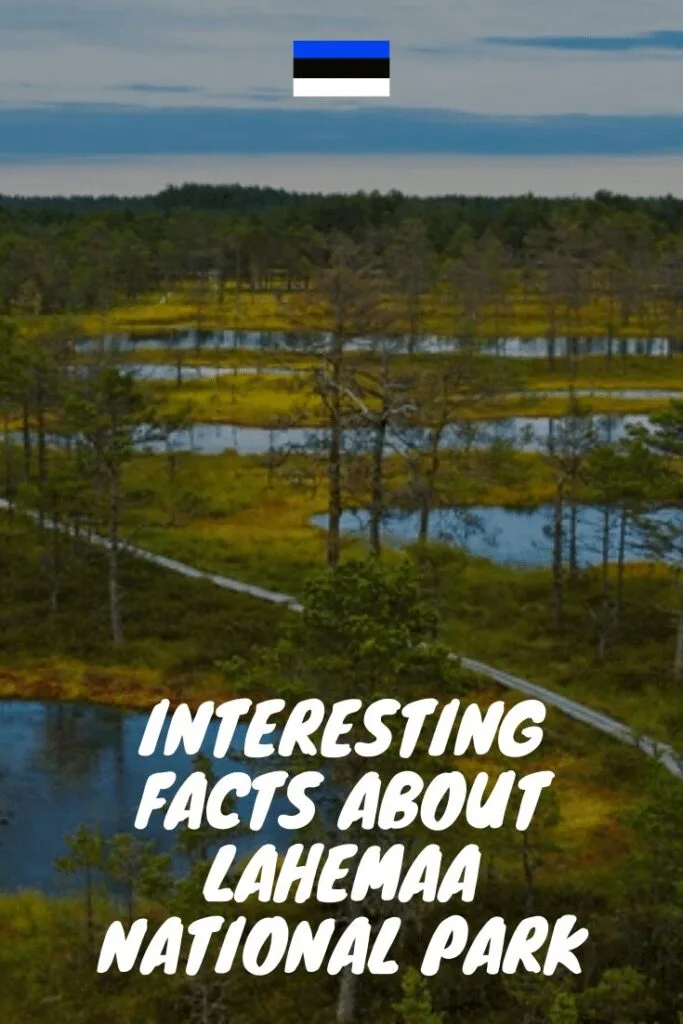
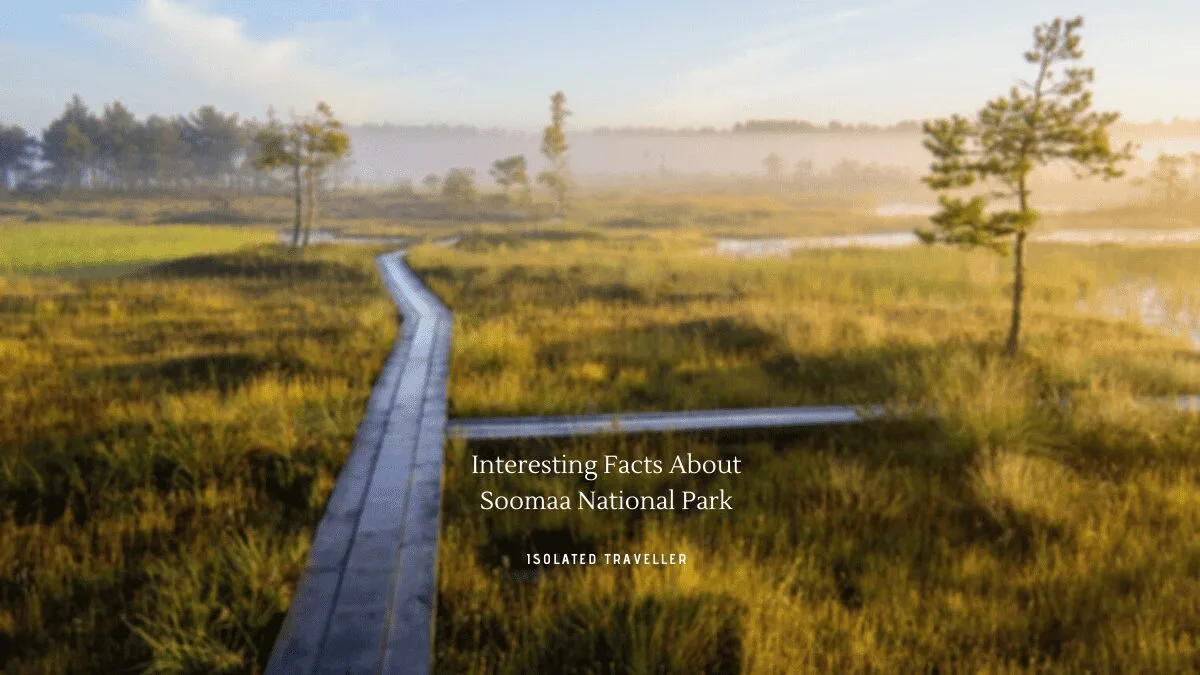
The name Soomaa translates simply from Estonian as “land of bogs” — accurate, because around 51% of the park’s surface is exactly that.
3. It’s Been an Important Bird Area Since 1989 — Four Years Before It Was a National Park
This is one of those facts that catches people off guard. Soomaa was recognised internationally as an Important Bird Area (IBA) in 1989, four years before Estonia made it a national park.
Its layered conservation status reads almost like a CV:
- 1989 — Designated an Important Bird Area
- 1993 — Established as a national park
- 1997 — Added to the Ramsar List of Wetlands of International Importance
- 2004 — Incorporated into the EU’s Natura 2000 network
- 2009 — Awarded European Destination of Excellence (EDEN) by the European Commission
The 2009 EDEN award came in the category “Estonia’s hidden treasures — tourism and protected areas,” recognising Soomaa as a model of low-impact, community-led tourism. The European Commission launched the EDEN competition in 2007, and Soomaa won Estonia’s title two years later.
4. It Covers 390 km² and Is Estonia’s Second-Largest National Park
Soomaa spans 39,884 hectares — roughly 390 square kilometres. To put that in scale, it’s larger than the entire city of Cologne. About 51% is bog, 5% is flood-plain grassland, 0.5% is cultivated farmland, and the remainder is various types of forest.
It’s the second-largest national park in Estonia, sitting between Pärnu and Viljandi counties, on the boundary of what Estonians call Vahe-Eesti — Meso-Estonia, the country’s middle band.
5. Kuresoo Bog Has One of the Highest Concentrations of Biodiversity in Estonia
Soomaa contains four large bog complexes separated by rivers — the Navesti, Halliste, Raudna and Lemmjõgi. Of these, Kuresoo Bog is the most remarkable.
It’s one of the two best-surviving large raised bogs in Estonia, with species diversity figures among the highest in the country. The southern edge of Kuresoo also features one of Estonia’s more dramatic landforms: a steep slope falling into the Lemmjõgi river that drops 8 metres over a horizontal distance of just 100 metres. In a country as flat as Estonia, that counts as nearly alpine.
6. The Park Has Dunes 50 Kilometres From the Sea
On the eastern edge of the park sit the highest sand dunes on the Estonian mainland — and they are roughly 50 kilometres inland from the present-day Baltic coastline.
These aren’t a geographical mistake. They’re a leftover from the end of the last Ice Age, when the area that’s now Soomaa was the bottom of an ancient lake formed between a retreating glacier and the Sakala Upland. As the climate warmed and the waters drained, the lake bed flattened out into bog plains and the old shorelines became inland dunes. Walking on sand half an hour from the nearest beach is one of the park’s stranger experiences.
7. It’s Home to a UNESCO-Listed Boat-Building Tradition
The haabjas is a single-log dugout canoe, hollowed and shaped from a single aspen tree. For centuries it was the workhorse of the Pärnu river basin — the only vehicle that made sense when half your landscape spent part of every year underwater.
In 2021, UNESCO added the building and use of the haabjas to its List of Intangible Cultural Heritage. Soomaa is the only region in Estonia where this skill is still actively practised, and Estonia is the only country in the European Union where the wider tradition of building dugout canoes from a single log has been kept alive at all.
Only a handful of Estonians still know how to make one. The park’s visitor centre in Kõrtsi-Tõramaa houses a permanent exhibition called “Through Soomaa with a Haabjas,” and visitors can paddle one during the fifth season.
8. The Park Is a Haven for Beavers — and Bigger Predators
Soomaa is widely considered one of the best places in Europe to see Eurasian beavers in the wild. The riverbanks are visibly shaped by them — felled trees, lodges, dam-altered watercourses — and dawn and dusk canoe trips reliably produce sightings.
Less visibly, the park is home to brown bears, lynx and wolves. They actively avoid humans and encounters are extremely rare, but the fact that all three of Europe’s largest predators still roam a park this accessible says something about how undisturbed Soomaa actually is. European otters, elk, wild boar and white-tailed eagles round out the wildlife list.
9. Entry Is Free, Year-Round
Despite its international designations, EU recognition and UNESCO links, there is no fee to enter Soomaa National Park. Walking trails are free. The visitor centre is free. Even the boardwalks across the bogs cost nothing to use.
The park is reachable in about two hours by car from Tallinn, making it a practical day trip from Estonia’s capital — though staying overnight in one of the surrounding villages is the standard recommendation, because dawn and dusk are when the park’s wildlife is most active.
There’s no grocery store inside the park, so visitors stock up in Tori village or in Pärnu before arriving.
10. It’s Part of an Elite European Wilderness Network
Soomaa was certified as a PAN Park in 2009 — part of a now-defunct European-wide network specifically focused on protecting genuine wilderness areas. It’s also a member of the EUROPARC Federation and holds the European Charter for Sustainable Tourism in Protected Areas.
What this means in practical terms is that Soomaa is one of the few places in Europe where new construction is essentially banned. After the area became a national park, new buildings could only be erected on existing foundations. This is why accommodation inside the park is limited to a small number of guesthouses and farmstays — a deliberate cap that keeps the wilderness genuinely wild.
Why These Facts Matter
Soomaa is small by global standards and quiet by European ones, but the layered facts of the place are what make it remarkable. A boat tradition older than most countries, a landscape shaped by ancient lakes, a wildlife list that includes all three of Europe’s apex predators, and a flood so dependable it became a season — all on a patch of Estonia smaller than Greater London.
For anyone passing through Estonia, or planning a Baltic trip with a slower pace than the usual Tallinn-Riga-Vilnius circuit, these are the facts worth knowing before you go.
Frequently Asked Questions About Soomaa National Park
Where is Soomaa National Park? Soomaa National Park is located in south-western Estonia, on the border between Pärnu and Viljandi counties. It’s roughly a two-hour drive south from Tallinn.
Why is Soomaa famous? Soomaa is best known for its “fifth season” — the annual spring flood that submerges up to 17,500 hectares and turns the park into a paddleable inland sea. It’s also home to a UNESCO-listed dugout canoe tradition and is considered one of Europe’s most pristine wetland wildernesses.
How big is Soomaa National Park? The park covers 390 km² (39,884 hectares), making it Estonia’s second-largest national park.
When was Soomaa established? Soomaa National Park was officially established on 8 December 1993.
What does “Soomaa” mean? “Soomaa” is Estonian for “land of bogs” — fitting, since roughly half the park is bog.
Is Soomaa National Park free to visit? Yes. There is no entry fee for the park, its trails or its visitor centre.