Trondheim, on a wide fjord in central Norway, is the third-largest city in the country and its first capital. Founded by a Viking king more than a thousand years ago, it is the home of the national shrine, Nidaros Cathedral, and of Norway’s leading technical university. Here are 25 facts about it.
Key facts at a glance
- Country: Norway (Trøndelag)
- Population: about 210,000
- Founded: 997
- Old name: Nidaros
- River: Nidelva
- Students: about 40,000
History
- Trondheim was founded in 997 by the Viking king Olav Tryggvason as a trading place at the mouth of the River Nid.
- It was the capital of Norway until 1217.
- King Olav Haraldsson, who completed the conversion of Norway to Christianity, was killed at the battle of Stiklestad in 1030 and buried here; he was soon declared a saint.
- His shrine made the city, then called Nidaros, the most important place of pilgrimage in northern Europe.
- In 1152 it became the seat of an archbishop whose province stretched to Iceland, Greenland and the Isle of Man.
- After a fire in 1681 the city was rebuilt with broad straight avenues, designed to stop fires spreading.
- In 1930 the city was officially renamed Nidaros; after furious protests it became Trondheim again within a year.
- In the Second World War the Germans built huge concrete submarine bunkers here, which still stand.
Nidaros Cathedral
- The cathedral was built over the grave of St Olav from about 1070 and is the northernmost medieval cathedral in the world.
- Its west front is covered with rows of statues, most of them carved in the 20th century during a restoration that lasted more than a century.
- Norwegian kings were crowned here; since 1958 they have been blessed in the cathedral instead.
- The crown jewels of Norway are displayed in the Archbishop’s Palace next door, the oldest secular building in Scandinavia.
- Pilgrims still walk the St Olav Ways to Trondheim, the longest of them 640 km from Oslo.
City sights
- The Old Town Bridge, with its carved red gates, is known as the “Portal of Happiness”.
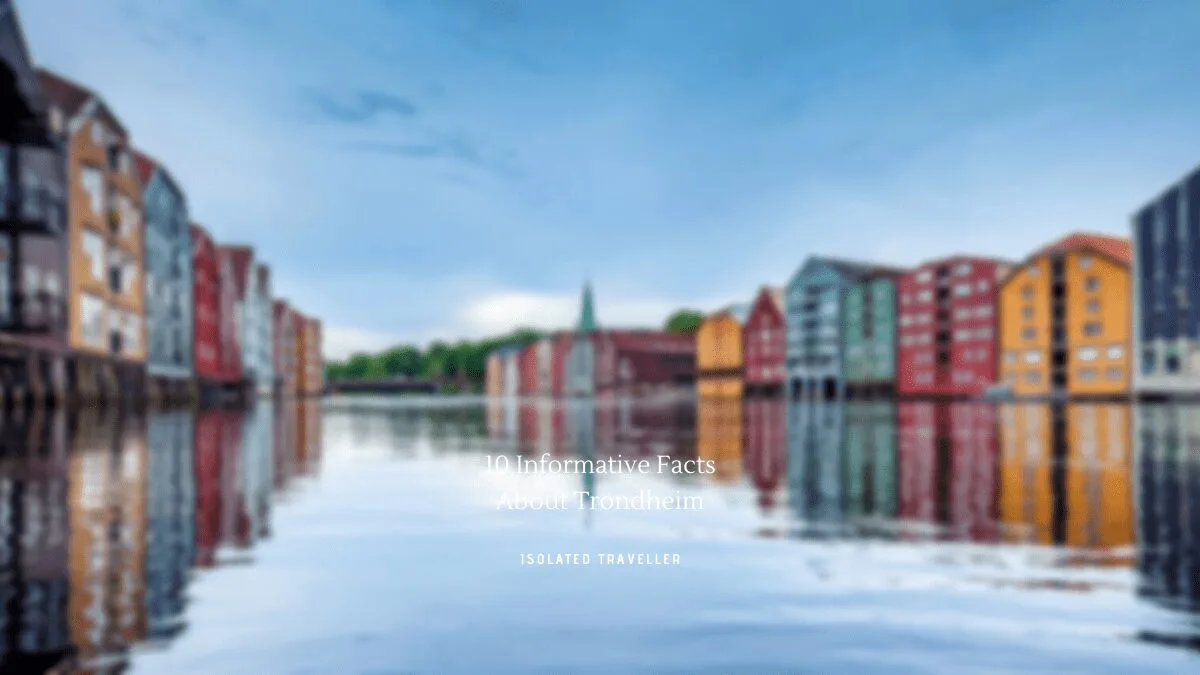
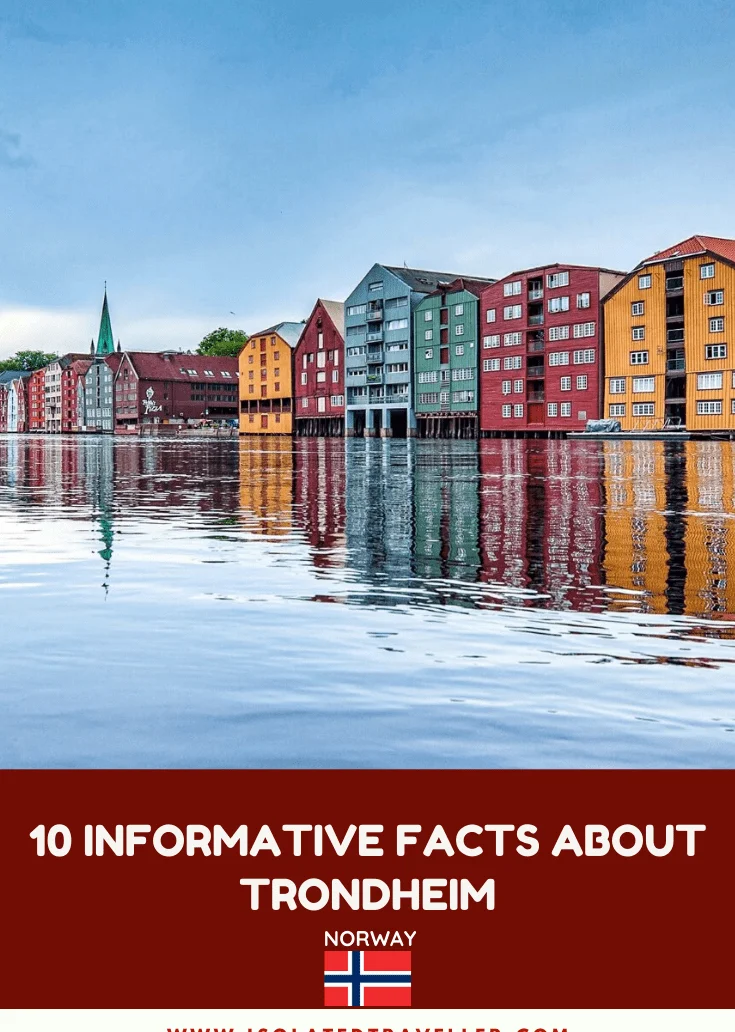
- Colourful 18th- and 19th-century warehouses stand on wooden piles along the river.
- The cobbled district of Bakklandet is lined with small wooden houses, cafés and bicycle shops.
- The Trampe bicycle lift, installed in 1993, was the first in the world: a moving footplate pushes cyclists up a steep hill.
- Stiftsgården, built in the 1770s with about 140 rooms, is one of the largest wooden buildings in Scandinavia and serves as the royal residence in the city.
- Kristiansten Fortress, on a hill above the centre, was built after the fire of 1681.
- The island of Munkholmen has been a place of execution, a monastery, a fortress and a prison; it is now a bathing spot.
- The tramline to the hills is the northernmost in the world.
People and sport
- The Norwegian University of Science and Technology makes Trondheim the technology capital of the country.
- The football club Rosenborg has won the Norwegian league more often than any other.
- A statue of Leif Erikson, a gift from Norwegian Americans, looks out to sea from the harbour.
- Rockheim, the national museum of popular music, is in a converted grain warehouse.
Read more
More from Norway: Norway, Bergen, Stavanger, Tromsø, Trondheim, Ålesund and Lillehammer. Related reading: 10 Informative Museum Ludwig Facts, 20 Interesting Facts About Porto.
Frequently asked questions
What is Trondheim famous for?
Nidaros Cathedral, its Viking history and its university.
Was Trondheim the capital of Norway?
Yes, until 1217.
How old is Trondheim?
It was founded in 997.
What is the Trondheim bicycle lift?
A device that pushes cyclists up a steep hill, the first of its kind.
Last updated: November 2026.