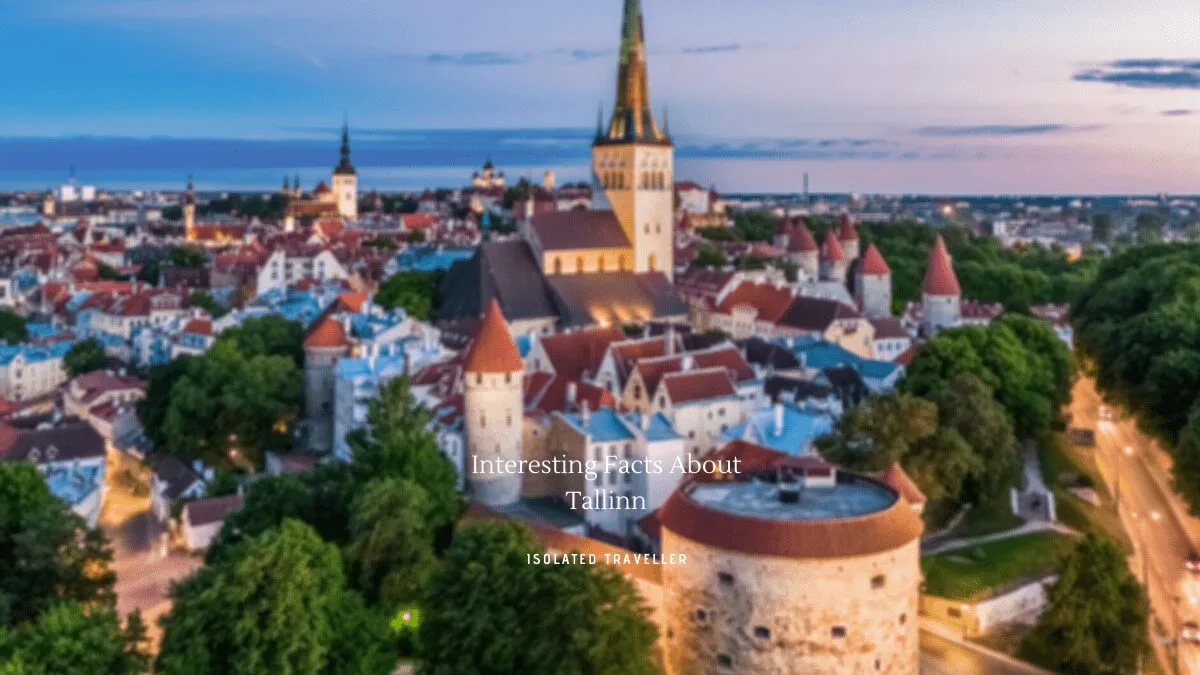
Tucked along the southern shore of the Gulf of Finland, Tallinn is one of Europe’s most underrated destinations: a medieval gem with cobblestone streets, towering church spires, and a thriving digital economy that has earned Estonia the nickname “the world’s most advanced digital society.” Whether you’re planning a visit, writing a school project, or simply curious about this Baltic capital, here are 28 fascinating facts about Tallinn that capture its blend of ancient history and modern innovation.
A Quick Introduction to Tallinn
Before we dive into the list, here’s the essential snapshot. Tallinn is the capital and largest city of Estonia, home to roughly 456,518 residents as of 2025. The city sits on the Baltic Sea, packs more than 800 years of history into its medieval Old Town, and somehow also produces more tech unicorns per capita than almost anywhere else on the planet. Curious yet? Let’s get into it.
Good, I have the updated population. Let me write the article now.
Interesting Facts About Tallinn: 28 Things You Didn’t Know About Estonia’s Capital
Tucked along the southern shore of the Gulf of Finland, Tallinn is one of Europe’s most underrated destinations: a medieval gem with cobblestone streets, towering church spires, and a thriving digital economy that has earned Estonia the nickname “the world’s most advanced digital society.” Whether you’re planning a visit, writing a school project, or simply curious about this Baltic capital, here are 28 fascinating facts about Tallinn that capture its blend of ancient history and modern innovation.
A Quick Introduction to Tallinn
Before we dive into the list, here’s the essential snapshot. Tallinn is the capital and largest city of Estonia, home to roughly 456,518 residents as of 2025. The city sits on the Baltic Sea, packs more than 800 years of history into its medieval Old Town, and somehow also produces more tech unicorns per capita than almost anywhere else on the planet. Curious yet? Let’s get into it.
History and Heritage Facts About Tallinn
1. Tallinn first appeared on a world map in 1154. Long before it was widely known, the Arab cartographer Muhammad al-Idrisi included the settlement on his map of the world, calling it “Qlwn.”
2. The city was first mentioned by name in 1219. This was the year Danish forces conquered the area, an event that would shape the city’s identity (and name) for centuries to come.
3. The name “Tallinn” comes from “Taani linnus.” In Estonian, this phrase means “Danish castle,” a direct nod to the Danish rulers who established a stronghold here in the early 13th century.
4. Tallinn received its official city rights in 1248. This put it on equal legal footing with other major Hanseatic League trading cities, kickstarting centuries of commercial prosperity.
5. Human settlement here dates back 5,000 years. Archaeologists working in Tallinn’s city centre have uncovered traces of habitation stretching back to the late Neolithic period.
6. The oldest building in Tallinn dates to 1246. That distinction belongs to the Dominican St. Catherine’s Monastery, which still stands as a window into the city’s deeply religious medieval roots.
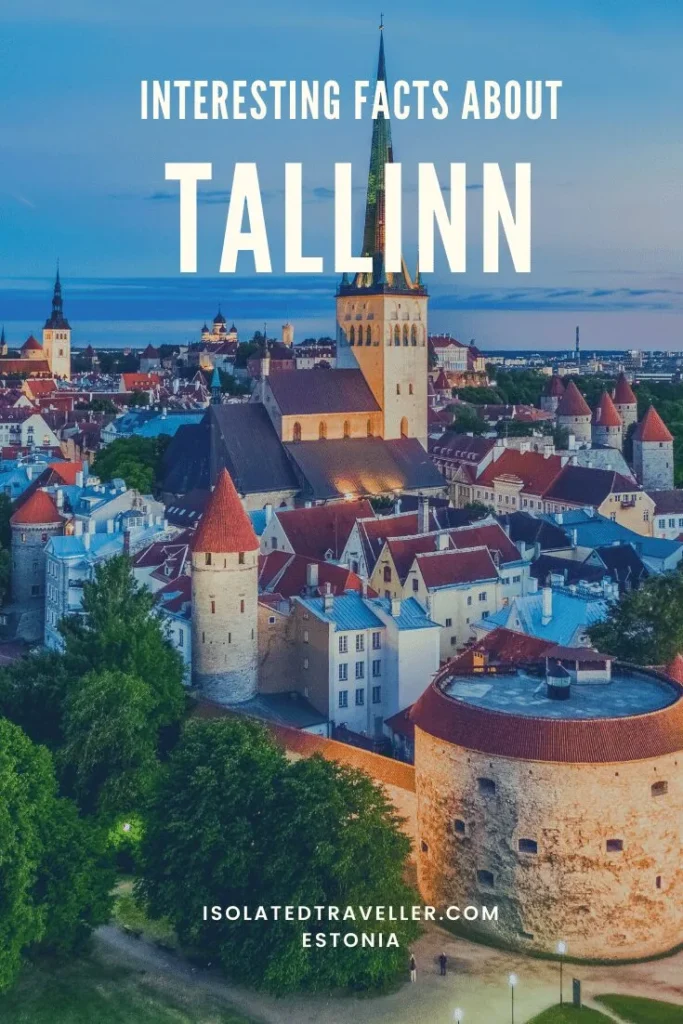
7. The Old Town is a UNESCO World Heritage Site. Tallinn’s Old Town is widely considered one of the best-preserved medieval city centres in Europe, complete with intact city walls, defensive towers, and Gothic spires.
8. The Old Town has two distinct parts. Toompea (the upper town) was historically home to nobility and clergy, while the lower town belonged to merchants and craftsmen, two worlds separated by stone walls.
9. Tallinn’s symbol sits atop the Town Hall. In 1530, a weather vane known as “Old Thomas” was placed on the spire of Tallinn Town Hall. Nearly five centuries later, he remains the official symbol of the city.
Modern Tallinn: Tech, Economy and Culture
10. Tallinn has the most start-ups per capita in Europe. Estonia’s capital is the birthplace of Skype, Wise, Bolt, and dozens of other tech giants, earning it a reputation as the Silicon Valley of the Baltics.
11. The GDP per capita in Tallinn is more than 170% of the Estonian average. As the country’s economic engine, the city pulls far ahead of the national norm.
12. Free Wi-Fi is everywhere. Estonia was one of the first countries in the world to declare internet access a human right, and Tallinn reflects that, with wireless internet available in cafés, parks, public transport, and even on beaches.
13. Tallinn was a European Capital of Culture in 2011. It shared the honour with Turku in Finland, putting Estonian art, music, and heritage on the global stage.
14. The city is home to more than 60 museums and galleries. Most are clustered in Kesklinn, the central district, covering everything from medieval guild halls to Soviet-era life and contemporary Estonian design.
15. Maiasmokk is the oldest café still in business. Opened in 1864, this beloved spot on Pikk Street has been serving marzipan, pastries, and coffee to locals and tourists for over 160 years.
Geography and Population Facts
16. Tallinn’s coastline stretches 29 miles (about 47 km). The city’s relationship with the Baltic Sea has shaped its trade, defence, and identity for nearly a thousand years.
17. The highest point in Tallinn is just 64 metres above sea level. Estonia is famously flat, and even its capital’s loftiest natural point would barely qualify as a hill elsewhere.
18. Lake Ülemiste is Tallinn’s largest lake. It’s also the source of drinking water for most residents of the city.
19. One-third of all Estonians live in Tallinn. With a total Estonian population of around 1.3 million, Tallinn’s roughly 456,000 residents make it the undisputed centre of the country.
20. Tallinn is multilingual. Most residents speak Estonian fluently, but English, Finnish, Russian, and German are also widely spoken, making it one of the easier European capitals to navigate as a visitor.
Landmarks and Tourist Attractions in Tallinn
21. Teletorn (the TV Tower) is the tallest structure in Estonia. Standing at 314 metres, it offers panoramic views of the city, the Baltic Sea, and on clear days, even glimpses of Finland.
22. Patarei Prison was originally a sea fortress. Built in 1840 under Russian rule, it later became a notorious Soviet-era prison and now stands as a haunting reminder of 20th-century history.
23. Tallinn hosts Estonia’s largest seaport. The Port of Tallinn handles millions of passengers each year, with regular ferry services to Helsinki, Stockholm, and St. Petersburg.
24. Tallinn welcomes 4.3 million visitors annually. Despite its small size, the city is a major draw for cruise passengers, day-trippers from Finland, and culture-seekers from around the world.
25. The 1980 Moscow Olympic sailing events were held in Tallinn. Pirita, on the city’s northeastern coast, hosted the sailing regattas, and the Olympic-era marina still operates today.
Climate and Daily Life
26. Tallinn has warm, mild summers and cold, snowy winters. Summer days can stretch close to 19 hours of daylight, while winter brings short days, frozen sea views, and Christmas markets in the Old Town square.
Why Visit Tallinn?
From its 5,000-year-old roots to its position at the cutting edge of digital innovation, Tallinn is a city of striking contrasts. You can wander medieval streets in the morning, sign legal documents online from a café over lunch, and watch the sun set over the Baltic from a 13th-century tower in the evening. Few capitals offer that kind of range in such a compact, walkable package.
Whether you’re drawn by the history, the food, the tech scene, or just the chance to see one of Europe’s best-preserved medieval Old Towns, Tallinn rewards every kind of traveller.