The Museum of Archaeology at Durham University tells the story of Durham and its region from the Stone Age to the present through the objects people left behind. Founded in 1833, it was the second university museum to open in England, after the Ashmolean in Oxford. For many years it occupied the Old Fulling Mill on the riverbank below the cathedral; since 2014 its gallery has been in Palace Green Library, between the cathedral and the castle, at the heart of the World Heritage Site. Entry is free. This guide explains what you will find and how to visit.
Key facts at a glance
- Location: Palace Green Library, Palace Green, Durham DH1 3RN
- Founded: 1833
- At Palace Green since: 2014
- Former home: the Old Fulling Mill, 1975 to 2013
- Covers: about 10,000 years of local history
- Entry: free
- Time needed: 30 to 45 minutes
History of the museum
A Victorian foundation
Durham University was founded in 1832, and a museum followed a year later, at first a cabinet of natural history, antiquities and curiosities housed in a building on Palace Green. Over time the natural history was dispersed, and the collection came to concentrate on archaeology.
The Old Fulling Mill
In 1975 the museum moved to the Old Fulling Mill, a picturesque stone building on the Wear beneath the cathedral, where monks and later cloth-workers had used water power since the Middle Ages. It was a charming setting but prone to flooding and hard to reach, and it closed in 2013. The mill is still one of the most photographed buildings in the city.
Palace Green Library
The gallery reopened in 2014 in Palace Green Library, a group of buildings begun in the 1660s by Bishop Cosin, whose own library, with its original shelves and portraits, survives next door.
What to see
Living on the Hills
The permanent gallery, “Living on the Hills: 10,000 Years of Durham”, follows the people of the area from hunter-gatherers to the industrial age. Each case is built around finds from a local site.
Prehistory
Flint tools, Bronze Age weapons and jewellery, and pottery from burial mounds.
Roman Durham
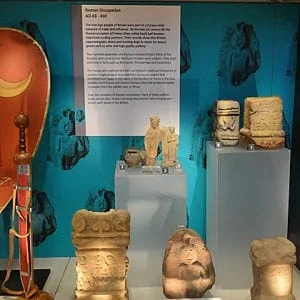
The museum holds one of the best collections of Roman material from the frontier zone, including altars and inscribed stones from the forts at Lanchester and Binchester, and a famous hoard of bronze objects thrown into the River Tees at Piercebridge as offerings.
Medieval city
Excavations in Durham itself have produced leather shoes, pottery, pilgrim badges and everyday objects from the waterlogged ground of the old town.
The Scottish soldiers
The museum led the project that identified the skeletons found beside Palace Green in 2013 as prisoners from the battle of Dunbar in 1650, who died in captivity in the cathedral. The research traced survivors to New England.
The wider collections
The university also holds Greek, Roman and Egyptian objects; the Egyptian and Asian collections are shown at the Oriental Museum, a short bus ride away.
Also in Palace Green Library
- Changing exhibitions drawn from the university’s rare books, manuscripts and museum collections; some charge for entry.
- Bishop Cosin’s Library of 1669, one of the earliest public libraries in the north of England, open on guided visits.
- The World Heritage Site Visitor Centre is a few steps away in Owengate.
- Tickets for tours of the castle are sold at the library reception.
Visiting
- Opening times: normally open daily; check the university’s website, as hours change with exhibitions and terms.
- Entry: the archaeology gallery is free.
- Access: step-free, with a lift.
- Families: there are handling objects, trails and dressing-up for children.
- Getting there: Palace Green is ten minutes’ walk uphill from the Market Place; the Cathedral Bus runs from the station.
Next door are Durham Castle and Durham Cathedral. See also our facts you might not know about Durham and the Durham University Botanic Garden.
Frequently asked questions
Where is the Durham Museum of Archaeology?
In Palace Green Library, between the cathedral and the castle.
Is the Museum of Archaeology in Durham free?
Yes.
Is the Old Fulling Mill museum still open?
No. It closed in 2013, and the museum moved to Palace Green.
When was the museum founded?
In 1833.
How long does a visit take?
About 30 to 45 minutes.
Last updated: November 2026.