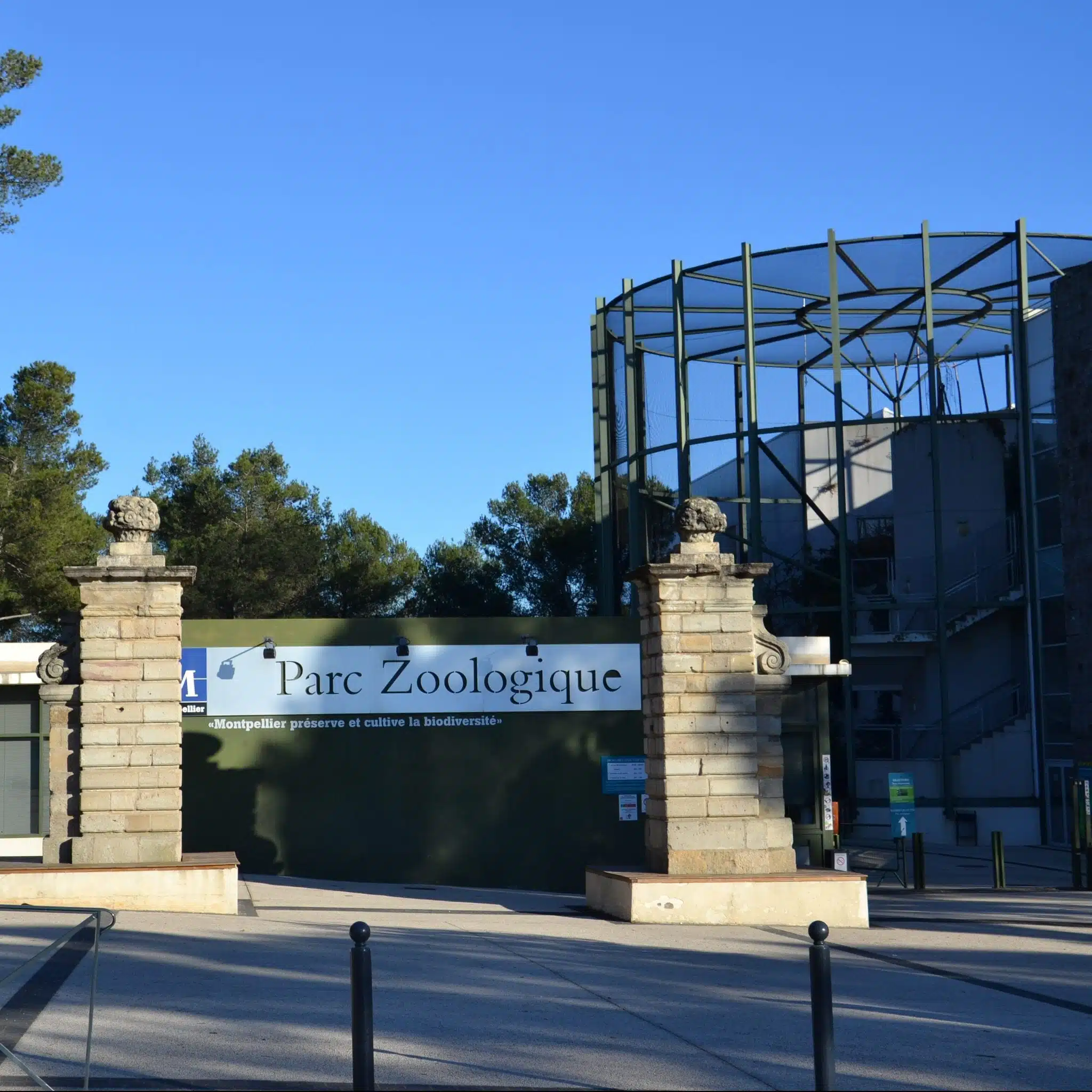
Montpellier Zoological Park, also known as the Parc de Lunaret, is one of the largest zoos in France and one of the very few that is free to enter. Spread over 80 hectares of Mediterranean woodland and scrub on the northern edge of the city, it keeps its animals in very large, natural enclosures along several kilometres of shaded paths. Next to it is the Amazonian Greenhouse, a tropical world under glass. This guide covers the history of the zoo, what to see, and how to plan a visit.
Key facts at a glance
- Location: 50 Avenue Agropolis, 34090 Montpellier, France
- Opened: 1964
- Size: about 80 hectares
- Animals: around 1,000, of about 100 species
- Entry: free; the Amazonian Greenhouse is ticketed
- Closed: Mondays (outside school holidays)
- Time needed: three to four hours
History
The gift of Henri de Lunaret
The estate of Lunaret was left to the city of Montpellier in 1910 by Henri de Lunaret, on condition that it be used for the public good. After serving as farmland and a nursery, it was opened as a zoological park in 1964.
A different kind of zoo
From the beginning the park was designed around space: the animals live in paddocks of up to several hectares, with trees and natural cover, so you sometimes have to wait and look for them. The zoo takes part in European breeding programmes for endangered species.
The Amazonian Greenhouse
Opened in 2007, the greenhouse recreates the habitats of the Amazon basin, from mangrove to mountain forest, in a building of 2,600 square metres.
What to see
African plains
Giraffes, white rhinoceroses, zebras, ostriches and several kinds of antelope.
Big cats and bears
Asiatic lions, cheetahs and Syrian brown bears.
Rare species
Maned wolves, Iberian wolves, Przewalski’s horses, Somali wild asses and scimitar-horned oryx, some of them extinct or nearly so in the wild.
Lemurs, birds and reptiles
Islands for lemurs, aviaries, and a reptile house.
The greenhouse
Inside the Amazonian Greenhouse you follow a one-way path past caimans, anacondas, piranhas, tamarins, sloths, anteaters, bats and free-flying birds, in heat and humidity; a tropical downpour is simulated at intervals.
The Lunaret nature reserve
Beside the zoo, along the River Lez, is a wild area with marked nature trails, free to explore.
Planning your visit
- Distances: the full circuit is about 11 kilometres, and the paths are hilly. Choose one or two of the colour-coded routes, and bring a pushchair for small children.
- When to go: mornings and late afternoons, when the animals are most active; in summer the middle of the day is very hot.
- Food: there are snack bars and many picnic tables, and water fountains along the paths.
- Little train: a road train offers a commentated tour for a small charge.
- Opening times: open from mid-morning to late afternoon or early evening, according to season; closed on Mondays except in school holidays.
Getting there
Take tram line 1 to Saint-Éloi, then the shuttle bus “La Navette” (route 13) to the zoo entrance, or drive; the car park is free. Read our Montpellier Zoological Park facts for more. In the centre, see the Porte du Peyrou, the Jardin des Plantes and Montpellier Cathedral. For more on the city, read our interesting facts about Montpellier.
More photos of Montpellier Zoological Park


Frequently asked questions
Is Montpellier Zoo free?
Yes. Only the Amazonian Greenhouse has an entry charge.
How big is Montpellier Zoo?
About 80 hectares.
How long do you need at Montpellier Zoo?
Three to four hours.
How do you get to Montpellier Zoo?
By tram line 1 to Saint-Éloi and then the shuttle bus, or by car.
Is Montpellier Zoo open on Mondays?
Not usually, except in school holidays.
Last updated: November 2026.