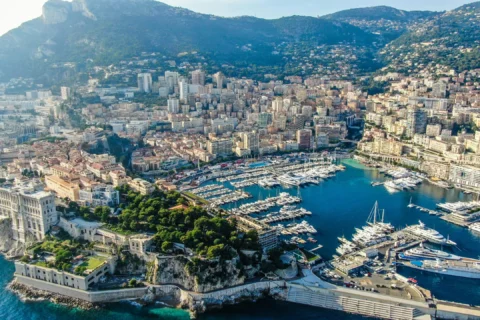
Málaga is the capital of the Costa del Sol, a port city of almost 600,000 people on the Mediterranean coast of Andalusia. Founded by the Phoenicians almost 2,800 years ago, it is one of the oldest cities in Europe, and in the last twenty years it has reinvented itself as a city of museums and technology. Here are the most interesting facts about Málaga, checked and updated.

Key facts at a glance
- Country: Spain
- Region: Andalusia
- Population: 597,173 (2025)
- Area: 395.55 square km
- Founded: about 770 BC
- People: Malagueños, nicknamed boquerones (anchovies)
History
1. Málaga was founded by the Phoenicians around 770 BC
Traders from Tyre, in what is now Lebanon, set up a colony called Malaka. That makes Málaga one of the oldest continuously inhabited cities in Europe.
2. The name may come from the word for salt
Malaka is often linked to a Phoenician word for salt, because fish was salted in the harbour. Another theory connects it to a word for a workshop or factory.
3. Carthage and then Rome ruled it
The Carthaginians took control in the 6th or 5th century BC, and the Romans in 218 BC. Under Rome the city grew rich exporting garum, a fermented fish sauce.
4. It was a Muslim city for almost 800 years
Málaga was conquered in the early 8th century and, as Mālaqah, became the main port of the kingdom of Granada.
5. The Christian siege of 1487 was one of the longest of the Reconquista
The city fell to Ferdinand and Isabella on 18 August 1487 after three months and eleven days. About 11,000 of its people were sold into slavery.
6. It received its coat of arms in 1494
The Catholic Monarchs granted the arms on 30 August 1494.
7. The largest naval battle of a European war was fought off its coast
The Battle of Málaga, on 24 August 1704, was the biggest sea battle of the War of the Spanish Succession.
8. Thousands died fleeing the city in 1937
When the forces of Franco took Málaga in February 1937, the refugees streaming along the coast road to Almería were bombed and shelled. More than 7,000 people were killed.
9. Torremolinos used to be part of Málaga
The resort was annexed by the city in 1924 and became independent again in 1988.
People
10. It is the sixth largest city in Spain
With 597,173 residents in 2025, it is the second largest city in Andalusia, after Seville. About 1.1 million people live in the metropolitan area.
11. It is the southernmost big city in Europe
No other European city of more than half a million people lies further south.
12. Pablo Picasso was born here
The artist was born in a house on the Plaza de la Merced on 25 October 1881 and lived in the city until he was ten. The Museo Picasso Málaga opened in 2003.
13. So was Antonio Banderas
The actor was born in Málaga on 10 August 1960. He has opened a theatre in the city and takes part in the Holy Week processions every year.
14. Locals are nicknamed anchovies
People from Málaga are called boquerones, after the small fried fish that is the signature dish of the city.
15. The first Spaniard to walk around the world is from Málaga
Nacho Dean set off on 21 March 2013 and completed the journey in 2016.
16. It has had the same mayor since 2000
Francisco de la Torre has led the city through its transformation.
Landmarks and museums
17. A Roman theatre lay hidden until 1951
The theatre, built in the 1st century BC, was rediscovered during building work at the foot of the Alcazaba.
18. The Alcazaba is one of the best-preserved Moorish fortresses in Spain
The palace-fortress dates from the 11th century. Above it stands Gibralfaro Castle, part of which is now a parador.
19. The cathedral is called the One-Armed Lady
Work on Málaga Cathedral went on for more than 250 years, and the second tower was never finished, which earned it the nickname La Manquita.
20. It has the oldest Protestant cemetery in mainland Spain
The English Cemetery was founded in 1831. Before that, non-Catholics had to be buried on the beach at night.
21. It has 28 museums
They include the Carmen Thyssen Museum, opened in 2011, and the Centre Pompidou Málaga, which opened in 2015 in a glass cube on the harbour, the first branch of the Paris museum outside France.
22. Calle Larios is one of the most expensive shopping streets in Spain
The marble-paved pedestrian street, opened in 1891, is the centre of city life.
Climate
23. The sun shines on about 300 days a year
Málaga has almost 3,000 hours of sunshine a year and rain on only 40 to 45 days.
24. It has the warmest winters of any big city in Europe
The mountains behind the city shelter it from cold northern winds.
25. The record high is 44.2 °C
The temperature was reached at the airport on 18 July 1978 and again on 19 July 2023.
26. It has snowed once in a century
Snow fell in the city on only one day in the whole of the 20th century, 2 February 1954.
27. The sea is warm enough for swimming for half the year
The water averages 23.5 °C in August.
Economy and transport
28. Its airport is the fourth busiest in Spain
Málaga-Costa del Sol Airport handled almost 26.8 million passengers in 2025 and carries 85 per cent of the international traffic of Andalusia.
29. It is a major cruise port
More than 570,000 cruise passengers arrived in 2025, making it the second busiest cruise port in the Iberian Peninsula.
30. It has a Silicon Valley of its own
Málaga TechPark, opened in 1992, employs about 29,000 people.
31. The high-speed train arrived in 2007
The AVE links Málaga with Madrid in about two and a half hours.
32. It has a metro
The network is 13.6 km long, with 19 stations.
33. The largest bank in Andalusia is based here
Unicaja has its headquarters in the city.
Festivals and food
34. Holy Week has been celebrated for 500 years
Huge floats are carried through the streets from Palm Sunday to Easter, and each year a prisoner is set free by one of the brotherhoods, a privilege granted by King Charles III.
35. The August fair lasts more than a week
The Feria de Agosto celebrates the conquest of the city in 1487, with flamenco, verdiales folk music and bullfights at La Malagueta.
36. It hosts the main festival of Spanish cinema
The Málaga Film Festival is held each spring.
37. Sardines are grilled on the beach in boats
Espetos, sardines skewered on canes and cooked over an olive-wood fire in an old fishing boat filled with sand, are the classic dish of the coast.
38. It gave its name to a sweet wine
Málaga wine, made from Pedro Ximénez and Moscatel grapes, was famous across Europe in the 18th and 19th centuries.
More city facts
If you enjoyed these, try our facts about Madrid, facts about Lyon, facts about Genoa, facts about Florence and facts about Alicante.
Frequently asked questions
Where is Málaga?
Málaga is on the south coast of Spain, in Andalusia, on the Mediterranean Sea.
What is Málaga famous for?
The Costa del Sol, Picasso, its Moorish Alcazaba, its museums, fried fish and its sunny climate.
How old is Málaga?
It was founded by the Phoenicians around 770 BC, almost 2,800 years ago.
Was Picasso born in Málaga?
Yes, in 1881. His birthplace on the Plaza de la Merced is now a museum.
How many people live in Málaga?
About 597,000 in the city and around 1.1 million in the metropolitan area.
Last updated: November 2026.