Key takeaways
- The name tells you the town’s whole story
- It sits on one of Sri Lanka’s oldest cultural borders
- Madukanda Vihara was reportedly the fourth resting place of the Buddha’s tooth relic
- The town has a major Hindu temple at its heart
- The Vavuniya Tank is one of the oldest reservoirs in the region
- The Archaeological Museum punches above its weight
Interesting Facts About Vavuniya: Sri Lanka’s Northern Gateway and Cultural Crossroads
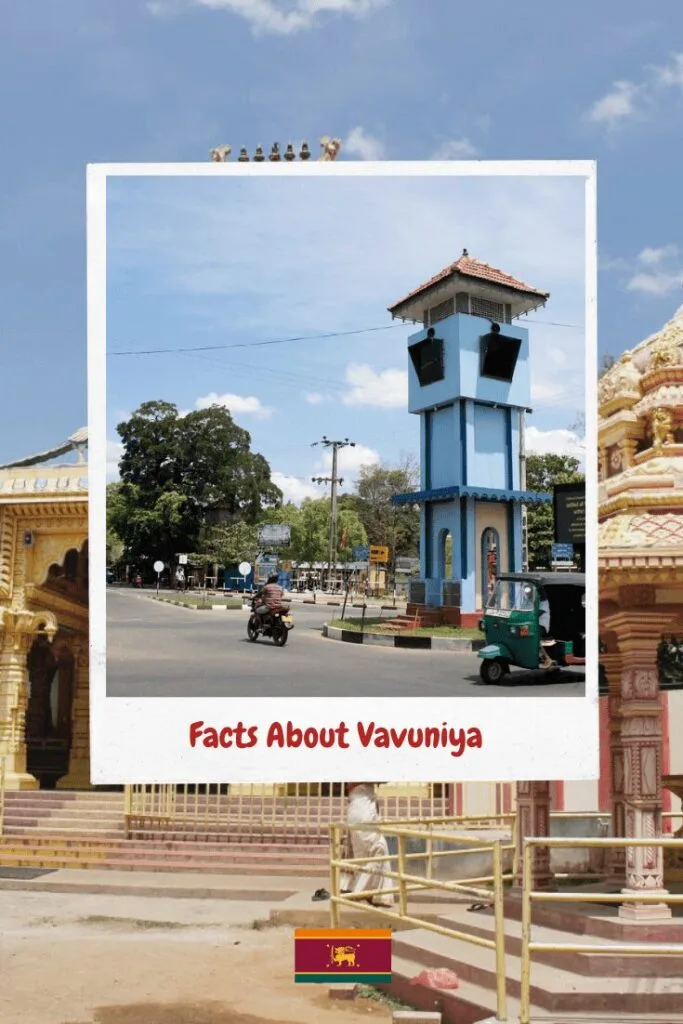
Most travellers heading to Jaffna pass straight through Vavuniya without slowing down. It sits roughly 250 km north of Colombo on the A9 highway, the main spine running up to the Tamil-majority north, and for decades it’s been treated as the place you stop for fuel and a quick meal before pushing on. That’s a shame, because Vavuniya has a long history, a genuinely fascinating cultural mix, and a few attractions that anywhere else in Sri Lanka would have packaged into a half-day tour by now.
Whether you’re planning a stop on your way to Jaffna, you’re already living in the district, or you just got curious about the name, this guide pulls together the things about Vavuniya that are actually worth knowing.
The name tells you the town’s whole story
Vavuniya gets its name from one of two sources, depending on who you ask. One theory traces it to “Vanni,” the Tamil word for the dry-zone forest region that surrounds the town. The other ties it to the Tamil words “vava” (tank or reservoir) and “kulam” (pond), pointing to the ancient irrigation systems that made human settlement here possible in the first place.
Both explanations are probably right in their own way. The area was heavily forested for most of its history, and it was also full of man-made tanks built by ancient Sinhala kings to store water through the dry season. That combination of forest and irrigation is basically what made the Vanni region what it is. Even today, drive ten minutes out of the centre in any direction and you’ll see either thick woodland or a stretch of paddy fields fed by a centuries-old reservoir.
It sits on one of Sri Lanka’s oldest cultural borders
This is the thing most people miss about Vavuniya. The town sits almost exactly on the boundary between the Tamil-majority north and the Sinhalese-majority south. Head north and you’re in Tamil cultural territory. Head south and the language, food, and architecture shift towards Sinhala Buddhist traditions.
The population reflects that. Sri Lankan Tamils make up around 84% of the city, with Sri Lankan Moors (Muslims) at roughly 8%, Sinhalese at about 6%, and a smaller number of Indian Tamils. You’ll hear Tamil on the streets, English in shops, Sinhala in administrative buildings, and Arabic phrases around the mosques. It’s one of the most genuinely multilingual towns in the country, and that mix has been part of life here for centuries, not just for the last few decades.
Madukanda Vihara was reportedly the fourth resting place of the Buddha’s tooth relic
This one is huge for anyone interested in Sri Lankan Buddhist history. About 4 km southeast of central Vavuniya, on the A29 road, sits a quiet Buddhist temple called Madukanda Vihara. According to tradition, it was built in the 4th century, and Buddhists believe the site was the fourth resting place of the sacred tooth relic of the Buddha as it travelled from Mullaitivu (where it arrived from India) to its eventual home in the Temple of the Tooth at Kandy.
The relic was brought to Sri Lanka during the reign of King Sirimeghavanna by a princess named Hemamala and a prince named Dantha, who hid it in the princess’s hair to smuggle it past hostile rulers. Madukanda was one of the stops on that journey.
The temple itself is small and quiet — granite carvings, an image house, weathered guard stones, and the kind of atmosphere you only get at places that have been continuously holy for a very long time. A tuk-tuk from the town centre costs around Rs 250 each way, and most visitors only stay an hour. Go anyway.
The town has a major Hindu temple at its heart
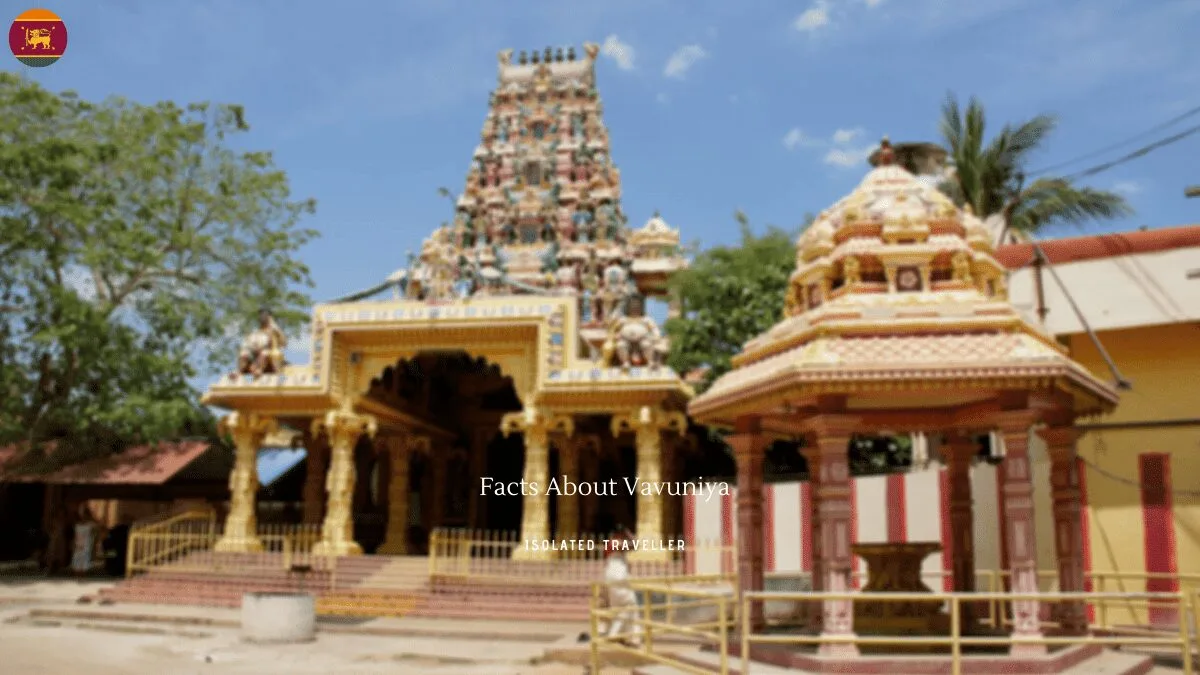
Right near the centre of Vavuniya is Kandasamy Kovil, a colourful Hindu temple dedicated to Lord Murugan (also called Kandaswamy), the Tamil god of war and victory. The temple complex includes a golden inner shrine and an elaborately decorated entrance tower (the gopuram), which is more or less the postcard image of the town.
Friday is the main day, when the temple holds its weekly poosai (puja ceremony). During Murugan’s annual festivals, the streets around the kovil fill up with devotees, processions, music, and the smell of camphor and incense in roughly equal measure. If you’re not Hindu, you’re welcome to visit respectfully — wear modest clothing, take your shoes off at the entrance, and skip taking photos inside without asking.
The Vavuniya Tank is one of the oldest reservoirs in the region
Sri Lanka’s dry zone is famous for its ancient hydraulic engineering, and Vavuniya is part of that story. The Vavuniya Tank (Vavuniya Wewa in Sinhala, Vavuniya Kulam in Tamil) was historically known as Villam Kulam and is considered one of the earliest reservoirs in the area. The current structure was restored in 1887 by the British, but the tank itself is far older.
By the late 1960s, its bund (the earthen wall holding the water in) stretched about 5,200 feet long, with a water-spread area of around 350 acres. That’s a lot of water in the middle of what used to be dry forest. The tank still feeds farms in the area and is a quiet, easy spot to walk or fish if you want a slower hour somewhere green.
You’ll also find smaller tanks scattered across the district — Poovarasankulam, Iratperiyakulam, Mamaduwa, Pavatkulam — most of them ringed by paddy and birdlife. Birdwatchers in particular do well here.
The Archaeological Museum punches above its weight
Vavuniya’s Archaeological Museum doesn’t make most international travel guides, but it should. It’s run by Sri Lanka’s Department of Archaeology and houses artefacts gathered from across the Vavuniya District, including Buddha statues from the 5th to 8th centuries, Hindu deity figures, ancient pottery, and even a small selection of Christian items.
It’s the best one-stop introduction to the layered religious history of the region. Walking through it, you get a real sense of how Buddhism, Hinduism, and later Christianity and Islam have all left their fingerprints on the same patch of land.
Entry is cheap, the building is small enough to do in an hour, and it’s right in town. Local tip: do this first, before you visit anything else in the district. The museum gives you the context that makes the rest of it make sense.
Vavuniya was a major railway terminus during the civil war
Sri Lanka’s Northern Railway Line connects Colombo all the way up to Kankesanthurai near Jaffna. Vavuniya station is one of the most important stops on that line. During the country’s 26-year civil war, when fighting between government forces and the Liberation Tigers of Tamil Eelam (LTTE) made northern travel dangerous and at times impossible, Vavuniya was the effective terminus of the line. You could get this far by train, and beyond that you had to find another way.
Since the war ended in 2009, the line has been fully reopened, and you can now ride from Colombo all the way to Jaffna in around six hours. The Vavuniya station itself is a working, busy place — not particularly grand architecturally, but it carries a lot of history. If you have an afternoon spare, sit at a tea stall opposite the station and watch the platforms fill and empty. It tells you more about modern Sri Lanka than any guidebook will.
The town carries a heavy recent history
It would be dishonest to write about Vavuniya without acknowledging the war years. The town’s position on the boundary between Tamil and Sinhalese areas meant it sat at the centre of the conflict for nearly three decades. It became a major site for military checkpoints, displacement camps, and humanitarian operations, particularly in 2009 when civilians fleeing the final phase of fighting in Mullivaikkal arrived here in enormous numbers.
The Pandara Vannian Monument in the town centre commemorates a regional chieftain who resisted British colonial rule in the early 19th century, but for many residents the most recent and personal history is much fresher than that. If you visit, be aware that the war’s aftermath is still part of daily life here for a lot of families. Be respectful in conversations, ask before taking photos of people, and don’t push for stories that aren’t being offered.
Isinbessagala has a stupa on a rock that’s older than most things you’ve stood next to
About 20 km from the centre of Vavuniya is Isinbessagala (sometimes spelled Isinbassagala), a Buddhist site with a stupa perched on top of a large granite rock. The stupa is believed to date back to around 250 BC, which makes it roughly the same age as Anuradhapura’s earliest sacred sites. It’s been restored a few times over the centuries, but the original spot has been considered holy for more than two thousand years.
The climb up is short but steep, and the view from the top across the surrounding plains is one of the best in the district. Bring water — there’s no shop at the top, and the rock heats up fast under the midday sun.
The food is properly Northern Sri Lankan
Vavuniya sits firmly inside the Tamil culinary tradition of Sri Lanka’s north, and the food reflects that. Expect string hoppers (idiyappam), puttu, dosa, idli, and rice with lots of spiced vegetable curries. Look out for sodhi (a mild coconut-milk curry served with string hoppers in the morning), pittu, and the dry-zone classic of rice with snake gourd, dried fish, and pol sambol.
There’s also a strong Muslim food presence thanks to the Moor community — kothu roti, biryani, and watalappan for dessert (a coconut-milk-and-jaggery custard that you should genuinely not skip). For something casual, the small eateries along the Bus Stand Road area are usually the best value, and you’ll eat well for under £3 a head.
Practical things worth knowing before you go
The best time to visit is December through April, when the weather is dry and the inter-monsoon rains have passed. May to September gets hot, and October to November brings the heaviest rainfall.
Getting there is straightforward. Trains run from Colombo Fort station to Vavuniya in about 4.5 to 6 hours depending on the service. Buses are slightly faster on a good day but considerably less comfortable. By car, allow around 4.5 hours from Colombo via the A9, which is now a properly upgraded road.
Once in town, tuk-tuks are the easiest way around. Agree a fare before you set off, or use a metered app like PickMe if you have a Sri Lankan SIM. Accommodation is modest — there are a handful of small hotels and guesthouses such as Hotel Oviya and Nelly Star Hotel, with rooms typically running £15–£40 a night.
One thing to plan for: this is dry-zone Sri Lanka. Daytime temperatures sit around 30–34°C for most of the year, with low humidity by Sri Lankan standards but very strong sun. A hat, sunscreen, and a refillable water bottle are not optional.
Why Vavuniya deserves more than a fuel stop
The honest reason most travellers skip Vavuniya is that the marketing budget for Sri Lankan tourism gets spent on beaches, hill country, and the Cultural Triangle. The north has been quietly rebuilding itself for fifteen years now, and Vavuniya is one of the towns where that work is most visible. Roads have improved. Trains run on time. New shops and small hotels are opening. People are welcoming in a way you don’t always find in places already used to tourist crowds.
You can see a 4th-century Buddhist temple in the morning, a Tamil Hindu temple at lunchtime, a colonial-era reservoir in the afternoon, and eat a proper Muslim kothu for dinner — all without leaving town. That kind of layered, lived-in cultural density is rarer than it sounds. If your route through Sri Lanka takes you anywhere near the A9, build in a night here. The town earns it.
Frequently asked questions about Vavuniya
Where is Vavuniya located? Vavuniya is in the Northern Province of Sri Lanka, about 250 km north of Colombo on the A9 highway. It’s the capital of Vavuniya District and the main town in the Vanni region.
Is Vavuniya worth visiting? Yes, especially if you’re already travelling between Colombo and Jaffna. Vavuniya offers ancient Buddhist sites like Madukanda Vihara, the colourful Kandasamy Kovil Hindu temple, a strong Archaeological Museum, and a genuine cultural mix you don’t easily find elsewhere in Sri Lanka.
What is Vavuniya famous for? Vavuniya is best known as the gateway to Sri Lanka’s Northern Province, for the historic Madukanda Vihara (reputedly the fourth resting place of the Buddha’s tooth relic), Kandasamy Kovil, its ancient reservoir system, and its role as a multi-ethnic crossroads between Tamil and Sinhalese cultural regions.
How do you get to Vavuniya from Colombo? You can travel by train (4.5–6 hours from Colombo Fort), by intercity bus, or by car on the A9 highway (around 4.5 hours).
When is the best time to visit Vavuniya? December through April is best, with dry weather and comfortable conditions for sightseeing. Avoid the heavy rains of October and November.
What languages are spoken in Vavuniya? Tamil is the most widely spoken language, with Sinhala and English also commonly used. You’ll also hear Arabic phrases around the town’s Muslim community.
Is Vavuniya safe for tourists? Yes. The civil war ended in 2009 and Vavuniya has been peaceful and openly accessible to travellers for many years. Normal travel precautions apply.