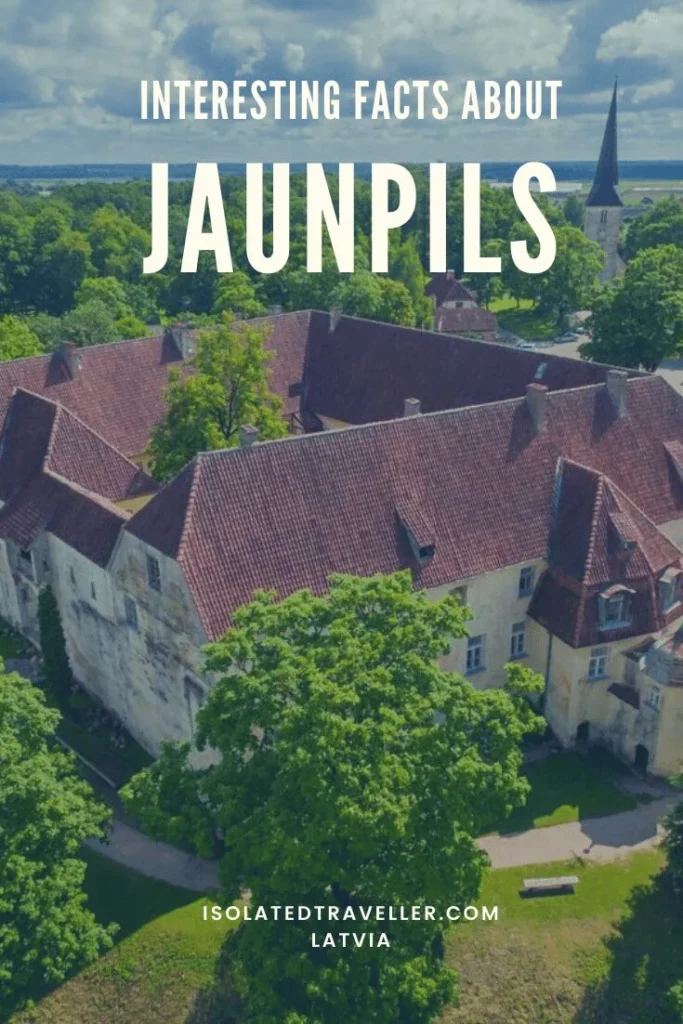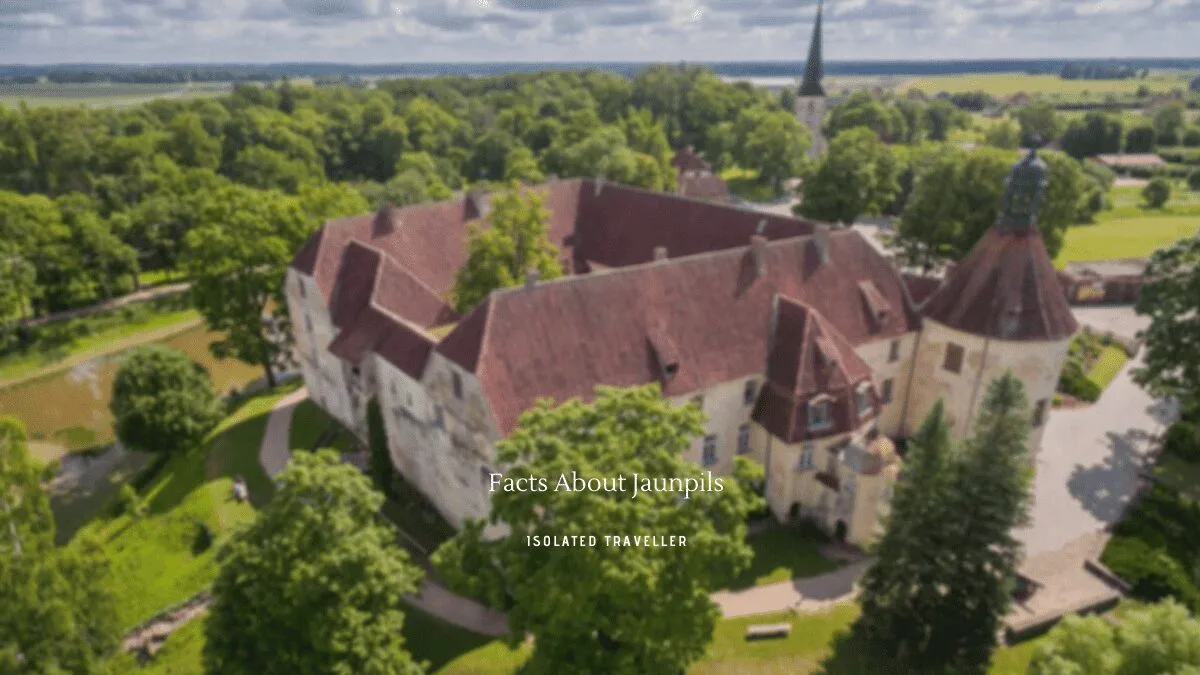
Tucked into the rolling countryside of Semigallia, just an hour’s drive from Riga, Jaunpils is one of Latvia’s most enchanting hidden corners. The village is small — fewer than 2,000 people call it home — but it punches far above its weight when it comes to history, architecture, and atmosphere. At its heart stands a 700-year-old Livonian Order castle that has survived wars, revolutions, fires, and Soviet renovations to remain one of the best-preserved medieval fortresses in the entire country.
If you’ve never heard of Jaunpils, you’re in good company. Here are 20 interesting facts about Jaunpils, Latvia, that reveal why this tiny village is one of the Baltics’ most rewarding day trips.
Jaunpils at a Glance
Before the deep dive, here are the basics. Jaunpils is a village in the Jaunpils Parish of Tukums Municipality in the Semigallia region of Latvia. It was once the centre of its own municipality, but in 2021 it was merged into the larger Tukums Municipality during Latvia’s nationwide administrative reform. The German name for the village is Neuenburg, which translates as “new castle” — a clue to what put this place on the map in the first place.
History Facts About Jaunpils
1. Jaunpils Castle was built in 1301. According to JG Arnt’s records, construction of Jaunpils Castle began in 1301, making it one of the oldest surviving medieval castles in Latvia. Jaunpilspils
2. It was founded by the Livonian Order. The castle was erected by the Master of the German branch of the Livonian Order, Gottfried von Roga, originally as a fortified outpost for crusader knights. Fandom
3. The castle’s first written mention dates to 1411. Although construction started in 1301, Jaunpils Castle was first mentioned in the lists of castles of the Order in 1411. Jaunpilspils
4. A round defensive tower was added in the 15th century. When firearms began to change medieval warfare, the castle adapted. A large, round defence tower was added in the southern corner with gutters that have survived to this day. Jaunpilspils
5. The von der Recke family owned it for nearly 350 years. In 1576, the castle was acquired by Thies von der Recke from the Recke Dynasty, which went on to own the castle for almost 350 years, until Latvia’s land reforms in the 1920s. latvia.travel
6. Swedes badly damaged the castle in 1625. The castle was heavily damaged in war by Swedes in 1625, part of the long-running Polish-Swedish conflicts that scarred this part of Europe. Fandom
7. It burned down during the 1905 Russian Revolution. The castle was burned down during the Russian Revolution of 1905. A year later it was rebuilt by architect Wilhelm Bockslaff, whose work you can still see today. Fandom
8. The poet Elisa von der Recke once lived there. One of the von der Recke family members who lived there in the 18th century was the poet Elisa von der Recke, a notable figure in Baltic German literary history. Fandom
9. The Soviets turned the castle into a cattle-breeding station. After the Latvian agrarian reforms of the 1920s, the castle complex housed a cattle-breeding experimental station. During the Soviet occupation of Latvia, the interior of the castle was heavily reconstructed in unmistakable 1960s style. Wikipedia
Architecture and Landmarks
10. Jaunpils is one of the best-preserved medieval castles in Latvia. Unlike many Livonian Order castles that now stand in ruins, Jaunpils is one of the rare Livonian order castles in Latvia that has been very well preserved and has not significantly changed its appearance over the course of time. Newcastlesoftheworld
11. The castle was originally a water stronghold. Jaunpils castle was built in 1301 as a water stronghold for the Livonian Order — encircled from three sides by the mill pond, with a drawbridge as the only way in. Newcastlesoftheworld
12. There’s a 16th-century Lutheran church nearby. The historic core of Jaunpils includes the Lutheran church from 1592, a watermill built in 1802, and the Swedish Wall built between 1618 and 1648, all forming the cultural and historical centre of the village. Newcastlesoftheworld
13. The watermill still stands. Built in 1802, the old castle watermill is now used as a cultural venue and is one of the most atmospheric spots in the village.
14. The Swedish Wall dates from the Thirty Years’ War era. Constructed between 1618 and 1648, this defensive structure is a rare survivor from one of Europe’s most turbulent military periods.
Modern Jaunpils
15. The castle is now a hotel and museum. In the 2000s, a team of Latvian designers refitted the interior of the castle, and today it operates as a hotel with medieval-style rooms, a museum, a pub, and event spaces. Wikipedia
16. There’s a medieval pub inside the castle. Under the vaults of the knights’ dining room, the Medieval Pub of the Jaunpils Castle is located. In candlelight and to the sounds of early music, guests of the castle have the opportunity to enjoy tasty meals — sometimes eaten with wooden spoons or by hand, just like in the Middle Ages. latvia.travel
17. The annual Medieval Festival is the highlight of the year. Every year on the first Saturday of August, the annual Medieval Festival is held in the courtyard, featuring knights battling each other to win the favour of the fair lady of the castle, arts and crafts fair, concerts, and exhibitions. latvia.travel
18. A masked carnival takes place every New Year’s Day. On the evening of January 1 each year, Jaunpils Castle hosts an annual Carnival — those in masks are charged less for entrance. latvia.travel
19. The population is small but spread across a large area. As of 2025, the parish has just 1,753 residents across roughly 157 square kilometres, giving it a population density of only about 11 people per square kilometre. Wikipedia
20. Jaunpils is the birthplace of Krišjānis Barons. Jaunpils Parish is the birthplace of Latvian scholar Krišjānis Barons, the folklorist who collected and catalogued the dainas — Latvia’s beloved traditional folk songs — and is celebrated as one of the most important figures in Latvian cultural history. Wikipedia
Why Visit Jaunpils?
If you’ve already ticked off Riga, Sigulda, and Cēsis, Jaunpils is the perfect next stop. It’s an easy hour’s drive from the capital, doesn’t require any planning, and rewards you with a genuinely intact medieval castle, a peaceful village setting, a serene lake reflection of the fortress walls, and a strong sense that you’ve stepped off the well-worn tourist trail.
Whether you come for the Medieval Festival in August, a candlelit feast in the castle pub, or simply a quiet Sunday walk by the millpond, Jaunpils offers something most European tourist destinations can no longer claim: authenticity without crowds.