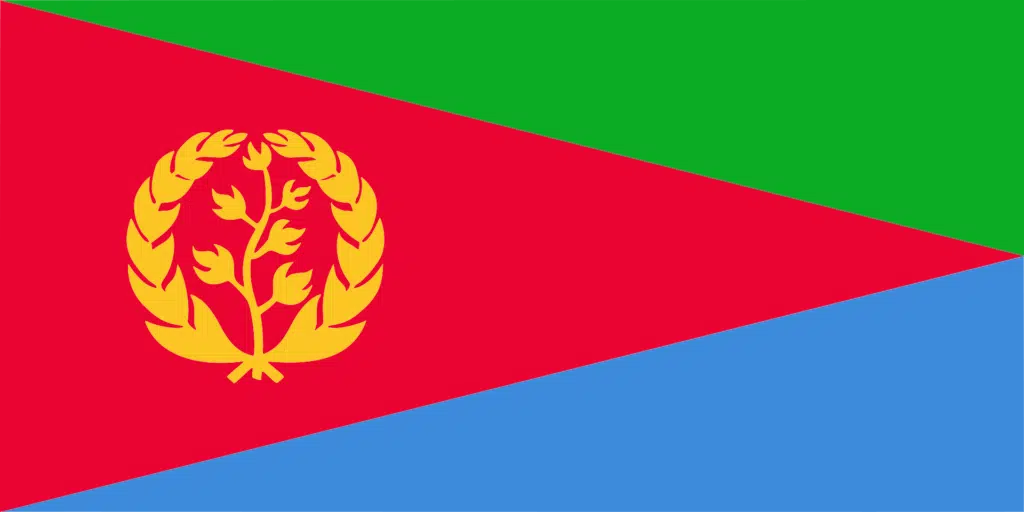
Ethiopia is a populous landlocked country in the Horn of Africa, the only African nation never formally colonised, with a unique Ethiopic script, Christian heritage and the rock-hewn churches of Lalibela.
Geography & landscape
Ethiopia sits in Eastern Africa, in the northern hemisphere of Africa. With an area of approximately 1,104,300 km², it is a continental-scale country, set in the northern hemisphere and exposed to the tropical climate band typical of its latitude. Its capital, Addis Ababa, lies near coordinates 8°, 38°.
The country shares the cultural and geographic context of Africa, with neighbouring states and trade routes shaped by its position in the wider Eastern Africa region. Topography, watersheds and coastline (where present) define the practical realities of agriculture, settlement and transport across Ethiopia.
People & society
The population of Ethiopia is around 123M. Communities, dialects and customs vary by region, and the country’s sense of identity is shaped by its history, its borders and the everyday rhythms of its towns and cities.
The official language is Amharic, used in government, education and most public life. Regional dialects, minority languages and immigrant communities add further linguistic texture.
Government & politics
Ethiopia is structured as a federal parliamentary republic. Political authority is exercised through institutions based primarily in Addis Ababa, with the head of state and head of government performing constitutional roles defined by the country’s legal framework. Domestic policy, foreign relations and the administration of public services all flow from this constitutional core.
Economy & currency
The official currency of Ethiopia is the Ethiopian Birr (ETB). Monetary policy, banking, taxation and trade are managed nationally, often in coordination with regional and international institutions. Major economic activity tends to cluster around Addis Ababa and other principal urban centres, with secondary economies built on the country’s natural resources, manufacturing capacity and service industries.
Culture & everyday life
The cultural footprint of Ethiopia shows up in cuisine, music, sport, religious life, festivals and design. National holidays mark the country’s historical pivots; family meals, café culture and street life follow patterns rooted in geography and tradition. International audiences usually meet Ethiopia through its sport, its music, its food, or the global diaspora that carries those things abroad.
Travel essentials
The capital, Addis Ababa, is the natural starting point for first-time visitors. International dialling uses the country code +251, and clocks are set to the EAT (UTC+3) time zone. ISO standards identify Ethiopia as ET (alpha-2) and ETH (alpha-3) — useful when booking flights, decoding number plates, or matching customs paperwork. The flag, 🇪🇹, appears at every border post and on every passport.
By the numbers
Sort or filter the table below to compare key metrics at a glance.
| Metric | Value | Unit / Note |
|---|---|---|
| Capital city | Addis Ababa | — |
| Continent | Africa | — |
| Sub-region | Eastern Africa | — |
| Population | 123M | people |
| Area | 1,104,300 | km² |
| Currency | Ethiopian Birr (ETB) | — |
| Calling code | +251 | international dialling |
| Time zone | EAT (UTC+3) | standard time |
| Government type | Federal parliamentary republic | — |
| ISO 3166 alpha-2 | ET | 2-letter code |
| ISO 3166 alpha-3 | ETH | 3-letter code |
| Latitude | 8 | degrees |
| Longitude | 38 | degrees |
Did you know?
Ethiopia uses its own calendar — currently around 7-8 years behind the Gregorian calendar — and a 12-hour clock starting at dawn.