Isolated Traveller Flags Europe
BY BLR
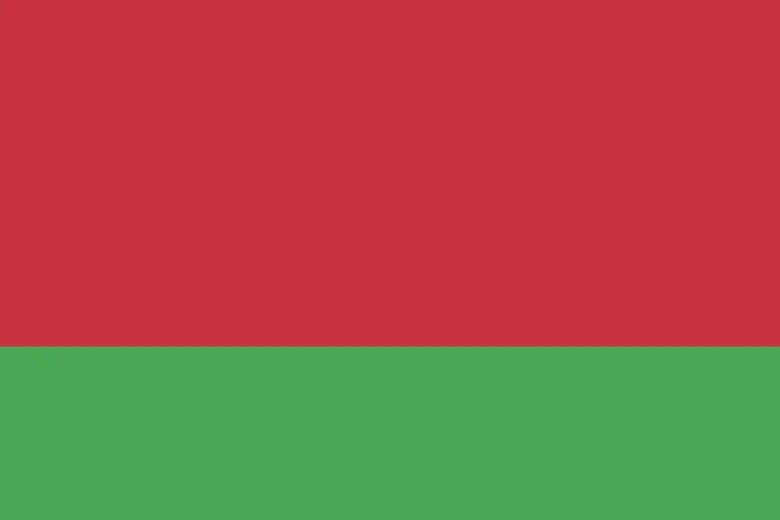
Flag of Belarus

A national flag · vexillological catalog

Flag of Belarus.

The flag of Belarus is a bold red and green banner featuring a traditional white-and-red ornamental pattern that reflects the nation's deep cultural roots. Officially adopted in 1995, the design symbolises Belarus' heritage, resilience, and connection to nature, and remains one of the country's most recognisable state symbols. The ornament itself was originally embroidered in 1917 by Matrena Markevich, a peasant craftswoman from the Vitebsk region, whose work has since become a national treasure and is honoured with a monument in Senno. Today, Belarusians celebrate the Day of the National Emblem and National Flag every second Sunday of May, and the country's largest national flag can be seen in National Flag Square in Minsk, where an enormous 98-square-metre flag atop a 70-metre stele marks a patriotic focal point of the capital.

Proportion
2:3
Adopted
1995
Designer
A state committee in 1995, with the ornamental band based on a 1917 embroidery by Matrena Markevich
Of
Belarus
01 · Symbolism
The flag of Belarus represents the country's national identity and historical heritage.
02 · Colour meanings

What each colour represents.

A breakdown of the symbolism behind each colour on the flag of Belarus.

Red

#CE1720

Represents courage, bravery, and the spirit of the Belarusian people. Carries the weight of past struggles, including the sacrifices of World War II and earlier independence movements.

Green

#4AAC5D

Symbolises hope, fertility, and the natural beauty of the country — particularly its dense forests, which cover roughly 40% of Belarus' territory.

White

#FFFFFF

Represents purity, peace, and the desire for independence. Forms the base of the traditional embroidered ornament along the hoist.

03 · Design & elements

How the flag is put together.

Two horizontal stripes — red on top, green below in a 2:1 ratio — with a vertical white-and-red ornamental band along the hoist.

Red horizontal stripe
Symbolises the nation's past struggles, including the sacrifices of World War II and earlier uprisings for independence.
Green horizontal stripe
Represents the forests, fields and natural landscape that define Belarus geographically.
Hoist ornament
A traditional embroidered pattern in red on white, drawn from Belarusian folk weaving — symbolises unity, respect for heritage, and the continuity of generations.
04 · Fun facts

Things to remember.

  1. 01

    The ornamental design was hand-embroidered in 1917 by Matrena Markevich from the village of Kostelishche, and a monument now commemorates her in Senno.

  2. 02

    Belarus celebrates the National Flag and Emblem Day on the second Sunday of May every year.

  3. 03

    National Flag Square in Minsk was opened in 2013 and features the country's largest national flag — measuring 98 m² and weighing 25 kg, atop a 70-metre stele.

  4. 04

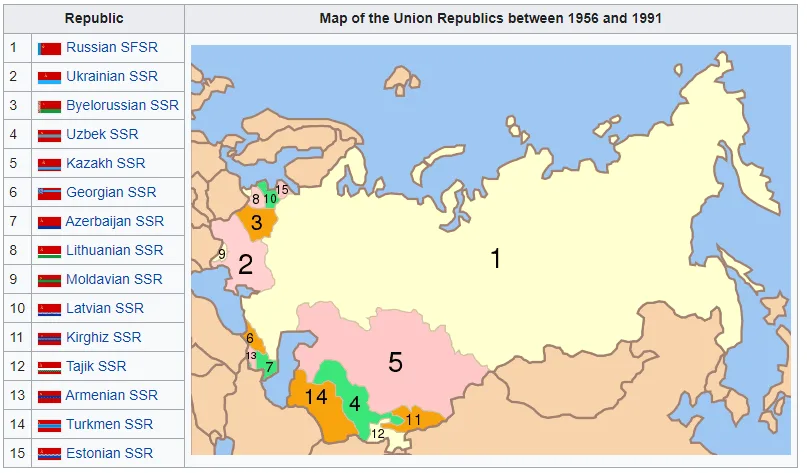
    The current flag is closely modelled on the flag of the Byelorussian SSR, with the Soviet hammer-and-sickle removed and the colour ratios adjusted.

  5. 05

    The flag's ornament is inspired by traditional Belarusian weaving, symbolising unity, respect for heritage, and the continuity of generations.

05 · History

How it came to be.

The current flag was adopted in 1995 following a national referendum called by President Alexander Lukashenko, replacing the white-red-white flag that had been used during the brief period of independence (1991-1995) following the dissolution of the Soviet Union. The new design deliberately echoes the flag of the Byelorussian Soviet Socialist Republic, with the Soviet emblem removed and the proportions of red to green altered.

A contested symbol

The flag is contested by the Belarusian opposition and democratic movement, who continue to use the historic white-red-white flag (used 1918-1919 during the Belarusian People's Republic, and 1991-1995). The opposition flag became a symbol of the 2020 protest movement and is widely recognised internationally, though displaying it inside Belarus carries legal risk.

03 · About

On the design.

The national flag of Belarus is the official banner of the Europe country. It is flown on government buildings and used in international representation.

The design

The Flag of Belarus is a national emblem rendered in the colours and proportions defined by the country’s flag law. Its official aspect ratio is 2:3, the height-to-length ratio that fixes how the flag should be cut and flown.

Symbolism & heraldry

The flag of Belarus represents the country's national identity and historical heritage.

Heraldic elements on the Flag of Belarus — bands, charges, emblems or stars — each carry meaning agreed at the moment of the flag’s adoption. Re-readings happen across generations: a colour or a symbol that began with one meaning often picks up further layers as the country’s history unfolds.

Adoption & history

Earlier banners flown by Belarus reflected the politics of their day; each redesign typically marked a moment of independence, regime change or constitutional reform. The current flag was chosen, debated and codified through the country’s official channels and is now protected by flag law.

Etiquette & protocol

The Flag of Belarus should be flown with respect: never allowed to touch the ground, never used as drapery for ceremonies it was not made for, and lowered or removed at sundown unless illuminated. When flown alongside other national flags, it takes precedence on home soil and is hoisted first and lowered last. On days of national mourning, the flag is flown at half-mast in line with directives from the head of state. These conventions are common to most nations and are usually written into the flag’s founding statute.

Specifications

Field Value Note
Country Belarus
Continent Europe
ISO alpha-2 BY 2-letter code
ISO alpha-3 BLR 3-letter code
Adopted year of current design
Proportion 2:3 height : length
Colours
Designer
Emoji 🇧🇾 Unicode codepoint sequence

Did you know?

Roughly 40% of Belarus is forested, including the ancient Białowieża woodland that still shelters Europe's last wild bison.

Frequently asked questions

Why does Belarus have two flags?

Belarus effectively has two competing flags due to its political divisions. The current red-and-green flag, adopted in 1995, represents the government and political system; the older white-red-white flag (used 1918–1919 and 1991–1995) is used by opposition groups, the Belarusian democratic movement, and the diaspora. The white-red-white flag symbolises independence and resistance, while the official flag represents the post-Soviet state direction.

Who created the Belarus flag?

The current flag was designed by a state committee in 1995 following a national referendum. The committee selected a slightly modified version of the Byelorussian SSR flag, removing the Soviet hammer-and-sickle and the gold border around the hoist ornament. The ornamental band itself is based on a 1917 embroidery by peasant craftswoman Matrena Markevich.

What does the Belarus flag symbolise?

The Belarusian flag symbolises the national identity, heritage and cultural significance of Belarus. The colours each carry meaning: red represents courage and bravery, green symbolises hope and fertility, and white represents purity and peace. The ornamental band along the hoist references centuries of folk weaving traditions.

Why was the Belarus flag banned at the US Open?

In 2022 the US Open banned the display of Belarusian and Russian national symbols due to Belarus's involvement in supporting Russia's invasion of Ukraine. Tournament organisers introduced the restriction to avoid political tensions and hostility between fans during the event; players from both countries continued to compete but without national identifiers.

What is the former name of Belarus?

The historical name for Belarus is Byelorussia (or Belorussia), used during the Soviet period and often translated as "White Russia." Before that, the territory was part of the Grand Duchy of Lithuania, then the Polish-Lithuanian Commonwealth, then the Russian Empire. The modern name "Belarus" was officially adopted after independence in 1991.

Which country does the Flag of Belarus represent?

The Flag of Belarus is the national flag of Belarus.

When was the Flag of Belarus adopted?

The Flag of Belarus was adopted in 1995 — about 31 years old.

What is the proportion of the Flag of Belarus?

The Flag of Belarus has an official proportion (height-to-width ratio) of 2:3.

Who designed the Flag of Belarus?

The Flag of Belarus was designed by A state committee in 1995, with the ornamental band based on a 1917 embroidery by Matrena Markevich.

04 · Country at a glance

Belarus — in brief.

Quick reference data on Belarus, the country this flag represents.

Capital
Minsk
Continent
Europe
Sub-region
Eastern Europe
Population
9.2M
Area
207,600 km²
Languages
Belarusian, Russian
Currency
Belarusian Ruble (BYN)
Government
Presidential republic
Flag age
about 31 years old
Dispatch 14 · MAY · 26

A small thing, worth noting.

Roughly 40% of Belarus is forested, including the ancient Białowieża woodland that still shelters Europe's last wild bison.

— filed from the catalog