Key takeaways
- The Cave Temple has been a continuous place of worship for 22 centuries
- The numbers inside the caves are staggering
- More than 80 caves have been documented around the rock
- You’re walking through three different art periods at once
- The wholesale vegetable market here feeds the country
- There’s an international cricket stadium on the edge of town
Interesting Facts About Dambulla: Sri Lanka’s Cave Temple Town That’s Hiding More Than You Think
Most people end up in Dambulla because of the caves. That’s fair — the Dambulla Cave Temple is a UNESCO World Heritage Site, it’s been a working Buddhist monastery for more than two thousand years, and it’s genuinely one of the most extraordinary religious sites in Asia. But if you only see the caves and leave, you’re missing the rest of the story.
Dambulla sits at the heart of Sri Lanka’s Cultural Triangle, roughly 148 km northeast of Colombo and 72 km north of Kandy. It’s a working town with a population of around 75,000, a wholesale market that feeds half the country, an international cricket stadium, a 2,700-year-old burial ground on its doorstep, and a rose quartz mountain a few miles up the road. Whether you’re planning a trip, already living in the area, or just curious about the name, here are the facts about Dambulla actually worth knowing.
The Cave Temple has been a continuous place of worship for 22 centuries
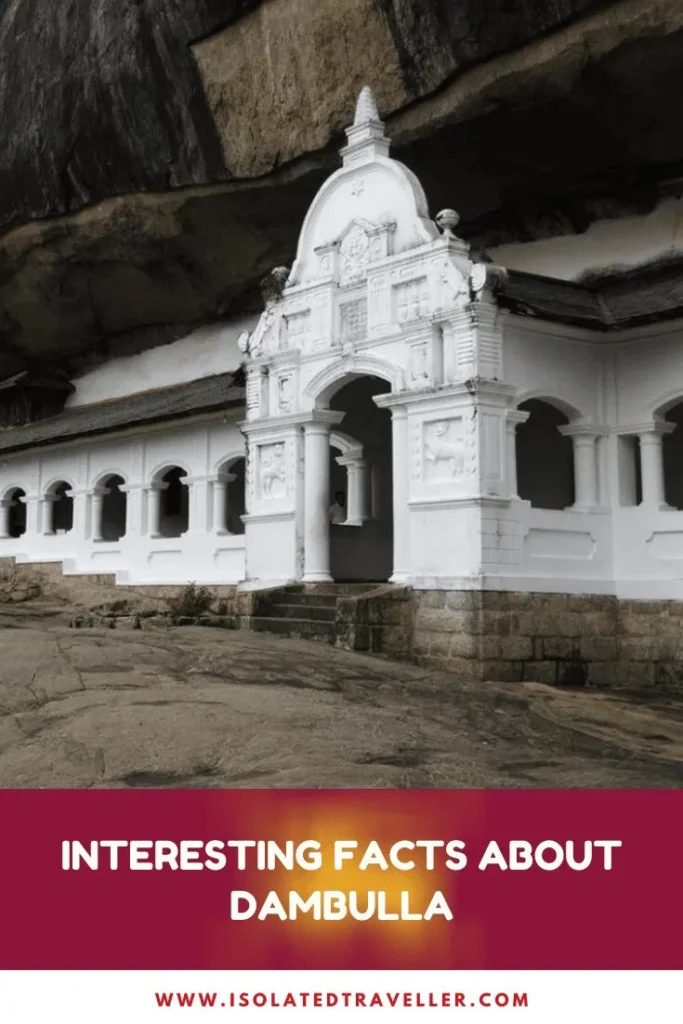
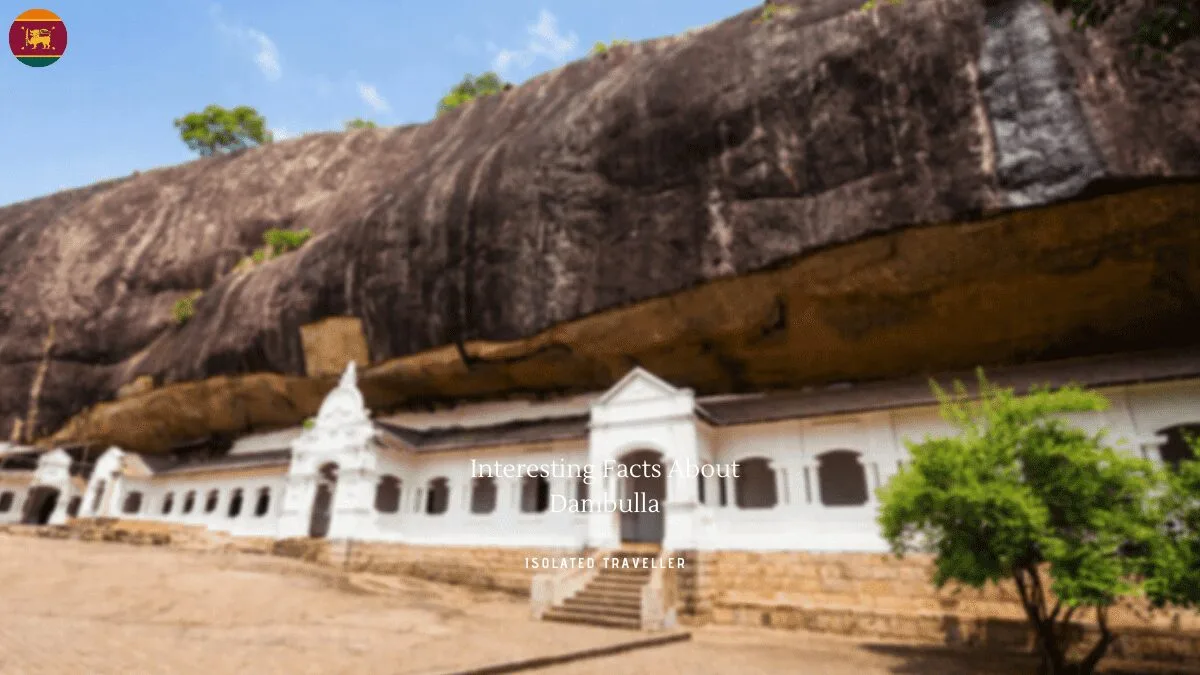
This is the headline fact and it deserves its space. The Dambulla Cave Temple, also called the Golden Temple of Dambulla or Rangiri Dambulu Rajamaha Viharaya, has been a sacred Buddhist site for more than 2,200 years. It was first established as a monastery in the 3rd century BC, then transformed into a fully painted and sculpted cave shrine in the 1st century BC by King Valagamba (sometimes spelled Vattagamini Abhaya).
His story is the kind of thing that sounds invented. He inherited the throne of Anuradhapura, then lost it within five months to a South Indian invasion. He spent fifteen years on the run, eventually finding refuge in the caves above what is now Dambulla. When he eventually reclaimed his kingdom, he returned to the caves and turned them into a temple as a gesture of thanks. Subsequent kings — most notably King Nissanka Malla in the 12th century and King Kirti Sri Rajasinha in the 18th century — added murals, statues, and structural improvements.
UNESCO inscribed it as a World Heritage Site in 1991, and it’s still a working monastery today. Monks live here. Pilgrims walk up the hill every day. It hasn’t been a museum at any point in its history. That continuity is part of what makes it remarkable.
The numbers inside the caves are staggering
There are five main caves in the temple complex, and the contents are properly impressive on paper before you even see them in person.
Across the caves you’ll find 153 Buddha statues, three statues of Sri Lankan kings, and four statues of deities including the Hindu gods Vishnu and Ganesh. The murals cover an area of around 2,100 square metres — that’s roughly the size of half a football pitch, painted on the inside of natural caves. The largest single statue is a 14-metre reclining Buddha carved directly from the living rock in Cave 1, with his disciple Ananda standing at his feet and Vishnu keeping watch at his head.
The rock itself rises 160 metres above the surrounding plains. From the top, on a clear day, you can see Sigiriya rock fortress in the distance.
More than 80 caves have been documented around the rock
Most visitors only see the five main caves, but the full archaeological site is much bigger. More than 80 caves have been documented in the rocky area around Dambulla, with evidence of human use stretching back to prehistoric times. Some of the caves still have their original drip lines — grooves cut into the rock above the entrances to channel rainwater away and keep the interiors dry. That bit of practical engineering is over two thousand years old and still doing its job.
You’re walking through three different art periods at once
One of the things that makes the Dambulla murals fascinating is that they’re not all from one era. The paintings layer over each other across centuries. Early work dates from the Anuradhapura period (roughly 1st century BC to 993 AD), with significant restoration during the Polonnaruwa era (1073 to 1250 AD). The most visually striking layer, though, is the 18th-century Kandyan-style repainting commissioned by King Kirti Sri Rajasinha, which gives the caves their distinctive red, gold, and ochre palette.
If you go with a good guide, they’ll point out where one era ends and another begins. Worth the extra cost if you’re at all interested in art history.
The wholesale vegetable market here feeds the country
Here’s a fact that surprises most tourists: Dambulla is home to the largest wholesale fruit and vegetable market in Sri Lanka. The Dambulla Dedicated Economic Centre (DEC) sits about 1 km from the Golden Temple and operates 24 hours a day. Produce from farms across the island arrives here in trucks, gets unloaded by hand, sold to wholesalers, and shipped back out to feed shops and restaurants from Jaffna to Galle.
You can wander in. There’s no entrance fee. Early morning is the best time — around 5 to 7 am — when the place is at peak chaos. Mountains of bananas, jackfruit, mangoes, pumpkins, leeks, beans, watermelons, varieties of brinjal you’ve probably never seen, and stacks of king coconut waiting to be hacked open. Mind where you walk. Trucks reverse without warning and a man with a hundred-kilo sack of onions on his shoulder is not going to stop for you. Bring a camera but ask before pointing it at people.
There’s an international cricket stadium on the edge of town
Cricket is essentially a religion in Sri Lanka, and Dambulla has its own piece of the action. The Rangiri Dambulla International Stadium sits on the outskirts of town, surrounded by jungle and with a natural lake nearby. It was built in just 167 days — a deliberately rushed project to host the 2000 ICC Champions Trophy — and has been hosting international one-day matches ever since.
The setting is what makes it. Unlike most modern cricket grounds, this one feels like it was dropped into the landscape rather than carved out of it. On a match day, you can see the floodlights from a long way off, with the silhouette of Dambulla Rock in the background. If your trip happens to overlap with a fixture, get a ticket. The atmosphere is properly Sri Lankan — loud, festive, and not particularly polite to the visiting team.
A 2,700-year-old burial site sits a few kilometres away
Most people who visit Dambulla never hear about the Ibbankatuwa Megalithic Tombs, which is a shame, because the site is genuinely fascinating. About 3 km from the cave temple, archaeologists have uncovered a prehistoric cemetery with human remains and grave goods estimated to be around 2,700 years old.
The graves are stone-cist tombs — burial chambers built from large slabs of granite — and the artefacts found at the site (pottery, beads, copper objects) suggest a settled, organised society living here long before the Buddhist and Sinhalese kingdoms arrived. The Ibbankatuwa site is one of the most important pre-historic discoveries in Sri Lanka, and you can visit it free or for a very small entry fee. There’s a small on-site museum that’s worth half an hour.
Sri Lanka’s biggest rose quartz mountain is nearby
This one feels invented but isn’t. About 30 km from Dambulla, near a village called Namal Uyana, there’s a rose quartz mountain that’s considered one of the largest deposits of its kind in South Asia. The area, called Jathika Namal Uyana, also contains the largest ironwood forest in Sri Lanka. The rose quartz here has been dated to around 550 million years old, and there’s a small spiritual community attached to the site as well.
It’s a moderate walk from the entrance to the pink rock formations at the top, and the view from up there across the surrounding forest is one of the better small payoffs in central Sri Lanka.
Dambulla is the launchpad for the entire Cultural Triangle
This is the practical reason most travellers end up here. Dambulla sits roughly at the geographic centre of Sri Lanka’s Cultural Triangle, which includes Anuradhapura (the ancient capital), Polonnaruwa (the medieval capital), Sigiriya (the rock fortress), Mihintale (where Buddhism first arrived on the island), and Kandy (the last Sinhalese royal capital).
From Dambulla, Sigiriya is about a 20-minute drive, Polonnaruwa is around an hour, Anuradhapura is about 90 minutes, and Kandy is roughly two hours. If you’re planning to see the cultural sites without doubling back across the country every day, basing yourself in Dambulla for two or three nights is the most efficient option.
Pidurangala Rock is the local secret
While Sigiriya gets the postcards and the entry fees (currently around $36 for foreigners), the locals will tell you to climb Pidurangala instead. It’s the rock right next to Sigiriya — close enough that the view from the top is essentially of Sigiriya itself, framed by the surrounding plains. The entry fee is a fraction of Sigiriya’s, the climb is a bit more rugged (some genuine scrambling at the top), and at sunrise it’s one of the best views in Sri Lanka full stop.
Pidurangala also has its own ancient cave temple at the base, with a long reclining Buddha statue. You can do Pidurangala at sunrise and then Dambulla Cave Temple later the same morning if you’re an efficient traveller.
The food here is properly central Sri Lankan
Dambulla sits in the dry zone, and the local food reflects it. Rice and curry is the standard meal — usually built around red rice with several small bowls of vegetable curries (think snake gourd, jackfruit, dahl, pumpkin), a fiery pol sambol (coconut, chili, lime), and a piece of dried fish or chicken. Look for kottu roti in the evening, hoppers and string hoppers for breakfast, and lavariya (sweet coconut-filled string hoppers) if you’re lucky enough to find someone making them.
There’s a strong tradition of Ayurvedic herbal teas and local king coconut water (thambili). Both are easy to find at roadside stalls and properly worth trying.
Practical things worth knowing before you go
The best time to visit is January through April, when the weather is dry and the heat is manageable. The southwest monsoon brings rain to other parts of the country from May to September, but Dambulla’s dry-zone location means it stays relatively rain-free through most of the year. October and November bring the inter-monsoon rains, which can be heavy but short.
Getting there is straightforward. Most travellers come by car or hired van from Colombo (around 3.5 to 4 hours), Kandy (around 2 hours), or Negombo (about 3 hours). There’s no train station in Dambulla itself — the nearest is at Habarana, about 25 minutes away. Buses are cheap and frequent on the main routes if you don’t mind a less polished ride.
Entry to the Dambulla Cave Temple is around 2,000 LKR for foreigners (roughly £5), and you’ll need to remove your shoes at the entrance and dress modestly (shoulders and knees covered for both men and women). The climb up to the caves takes 15–20 minutes and is moderately steep, so go in the early morning or late afternoon to avoid the midday heat.
Accommodation in Dambulla ranges from cheap guesthouses (£10–£20 a night) to small boutique hotels and a couple of upmarket resorts on the edge of town. For something more atmospheric, look into the eco-lodges and tented camps around nearby Sigiriya.
Why Dambulla deserves more than a half-day visit
The easy thing to do is hit the Dambulla Cave Temple on the way somewhere else and tick it off. Most tour itineraries are built that way. But Dambulla rewards a longer stay. You can wake up early for Pidurangala, watch the sunrise, eat hoppers in town, walk through the wholesale market while it’s still busy, climb up to the caves before the heat gets ridiculous, drive out to Ibbankatuwa in the afternoon, and finish with a quiet evening watching the sun set behind the rock from a rooftop in town.
That’s one day. The Cultural Triangle has at least a week’s worth of similar days, all centred around Dambulla. The town doesn’t have the polish of Galle or the buzz of Colombo, but it’s got something neither of those places has — depth that goes back twenty-two centuries and a working life that still revolves around farming, faith, and rock.
Frequently asked questions about Dambulla
Where is Dambulla located? Dambulla is in Sri Lanka’s Central Province, about 148 km northeast of Colombo and 72 km north of Kandy. It sits at the heart of the country’s Cultural Triangle.
What is Dambulla famous for? Dambulla is best known for the Dambulla Cave Temple (also called the Golden Temple of Dambulla), a UNESCO World Heritage Site with five caves containing 153 Buddha statues and over 2,100 square metres of ancient murals. It’s also home to Sri Lanka’s largest wholesale vegetable market and the Rangiri Dambulla International Cricket Stadium.
How old is the Dambulla Cave Temple? The site has been a place of Buddhist worship for more than 2,200 years, with the earliest monastery dating back to the 3rd century BC. The cave shrines were established in the 1st century BC by King Valagamba.
Is Dambulla worth visiting? Yes, especially if you’re exploring Sri Lanka’s Cultural Triangle. Dambulla makes an excellent base for visiting Sigiriya, Pidurangala, Polonnaruwa, Anuradhapura, and Kandy, all of which are within easy driving distance.
How long do you need in Dambulla? For the cave temple alone, two to three hours is enough. To explore Dambulla and use it as a base for the Cultural Triangle, plan on staying two to three nights.
What is the best time to visit Dambulla? January through April offers the driest and most comfortable weather. The dry-zone location means it stays relatively rain-free even during Sri Lanka’s southwest monsoon.
How much does it cost to enter the Dambulla Cave Temple? Entry for foreign visitors is around 2,000 LKR (roughly £5). Locals pay considerably less. The climb up to the caves takes about 15–20 minutes from the main entrance.
Can you visit Dambulla and Sigiriya in one day? Yes. They’re about 20 minutes apart by car. Many visitors do Sigiriya or Pidurangala at sunrise and Dambulla Cave Temple later the same morning.