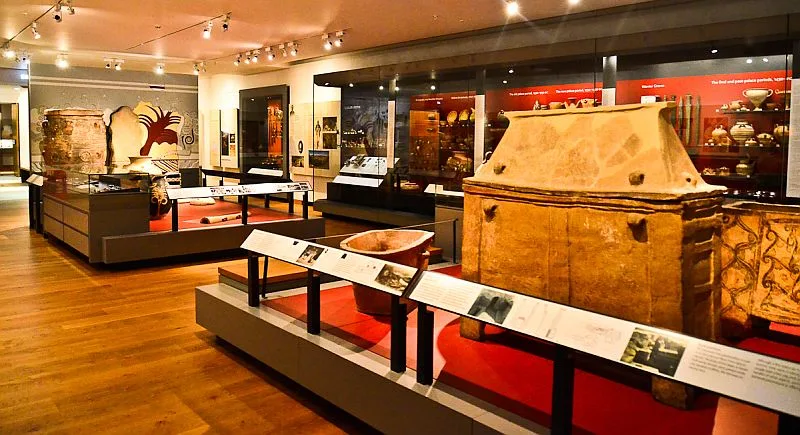
The Ashmolean Museum of Art and Archaeology in Oxford is the oldest public museum in Britain and the oldest university museum in the world. Founded in 1683, it holds collections that range from Egyptian mummies and Minoan pottery to drawings by Michelangelo and Raphael, paintings by Turner and Van Gogh, and the Alfred Jewel, made for the greatest of the Anglo-Saxon kings. Entry is free. This guide covers the history of the museum, the things you should not miss, and how to plan a visit.
Key facts at a glance
- Location: Beaumont Street, Oxford OX1 2PH
- Founded: 1683
- Named after: Elias Ashmole
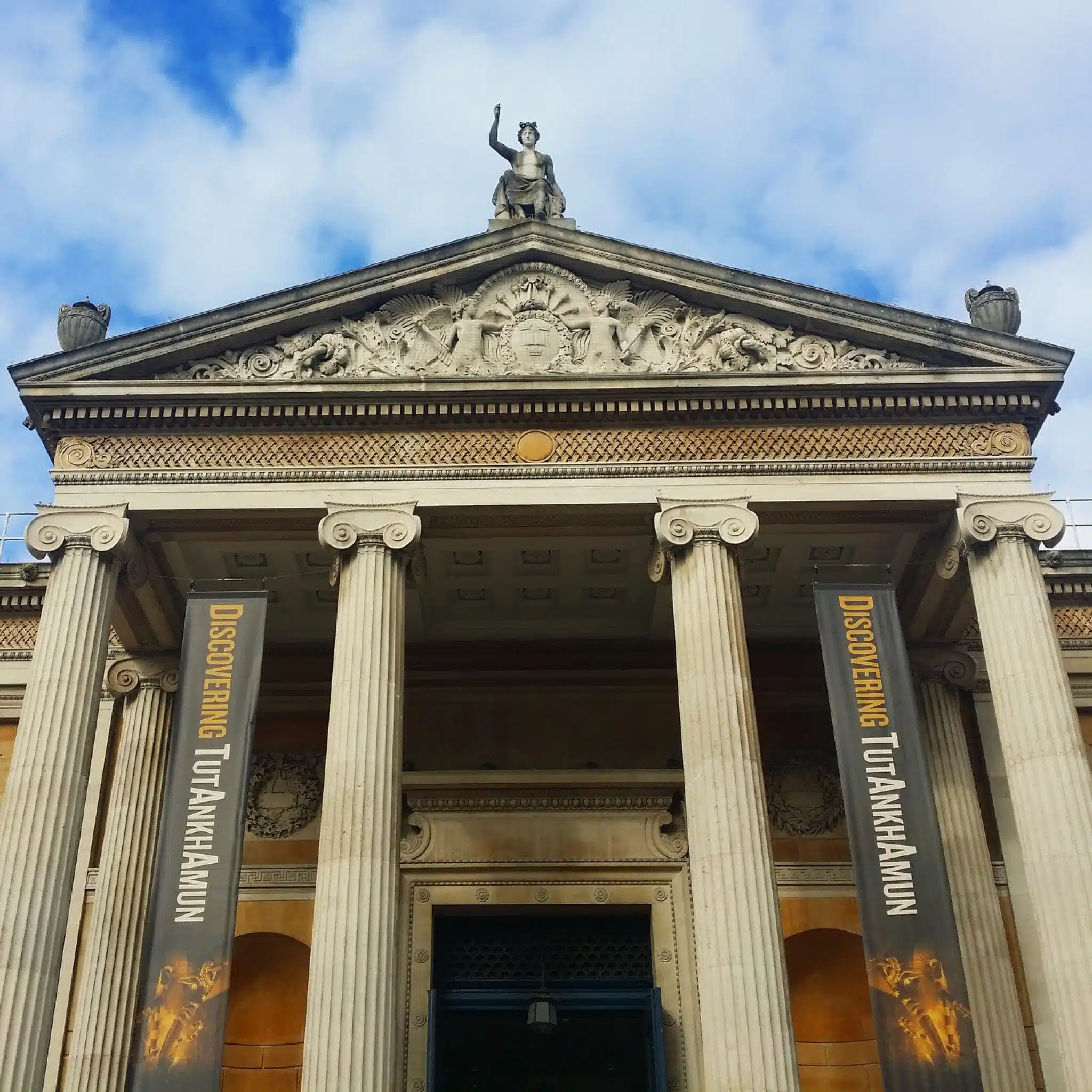
- Present building: by Charles Cockerell, 1845
- Redeveloped: 2009, with 39 new galleries
- Entry: free; special exhibitions charge
- Time needed: two to three hours
History
The Tradescants’ Ark
The story begins with two royal gardeners, John Tradescant and his son, who in the early 17th century gathered plants and “rarities” from around the world and displayed them at their house in Lambeth, known as the Ark. It was the first museum in England open to the paying public.
Elias Ashmole
The collection passed, after a bitter dispute with the younger Tradescant’s widow, to the antiquary Elias Ashmole, who gave it to the University of Oxford on condition that a building was provided for it. The first Ashmolean opened on Broad Street in 1683; that building is now the History of Science Museum.
The new museum
In 1845 the university’s art collections moved into a grand neoclassical building by Charles Cockerell on Beaumont Street, and in 1908 they were united with the archaeological collections under the Ashmolean name. Sir Arthur Evans, the excavator of Knossos, was its Keeper and gave it the finest Minoan collection outside Crete. A redevelopment by Rick Mather, opened in 2009, doubled the display space behind the old facade.
Treasures to look for
The Alfred Jewel
A teardrop of gold, enamel and rock crystal made in the late 9th century, inscribed in Old English “Alfred ordered me to be made”. It was found in Somerset in 1693.
Powhatan’s Mantle
A deerskin hanging decorated with shells, from Virginia, associated with the father of Pocahontas; it came from the Tradescant collection.
Guy Fawkes’s lantern
The lantern said to have been carried by Guy Fawkes when he was arrested in the cellars of Parliament in 1605.
Egypt and Nubia
The shrine of King Taharqa, the only complete pharaonic building in Britain, along with mummies and some of the earliest Egyptian sculpture known.
The Minoans
Storage jars, seals and frescoes from Knossos, excavated by Arthur Evans.
Drawings by Raphael and Michelangelo
The museum owns the largest collection of Raphael drawings in the world; selections are shown in rotation.
Paintings
Paolo Uccello’s “The Hunt in the Forest”, Piero di Cosimo’s “Forest Fire”, and works by Titian, Turner, Constable, the Pre-Raphaelites, Pissarro, Manet and Van Gogh.
The Messiah violin
The “Messiah” Stradivarius of 1716, among the most famous and best-preserved violins in existence.
Asia and the Islamic world
Outstanding Chinese paintings and ceramics, Japanese art, and Islamic pottery and metalwork.
Visiting
- Opening times: open daily, 10 am to 5 pm, with occasional late openings.
- Entry: free; booking a free ticket online is suggested at busy times.
- Tours: free highlight tours and talks run on most days.
- Food: a café in the basement and a rooftop restaurant with a terrace.
- Access: step-free, with lifts to all floors.
- Getting there: the museum is in the city centre, opposite the Randolph Hotel, ten minutes’ walk from the station. Use the park-and-ride if arriving by car.
Also in Oxford, see the Bodleian Library and Oxford Castle and Prison, and read our interesting facts about Oxford.

Frequently asked questions
Is the Ashmolean Museum free?
Yes.
What is the Ashmolean famous for?
It is the oldest public museum in Britain, with treasures such as the Alfred Jewel.
How long do you need at the Ashmolean?
Two to three hours.
When was the Ashmolean founded?
In 1683.
Who was Ashmole?
Elias Ashmole, the antiquary who gave the founding collection to the university.
Last updated: November 2026.