Key takeaways
- Quick facts
- All 25 micro-states, ranked by area
- The European six
- The Caribbean seven
- The Pacific seven
- The Indian Ocean and the Atlantic
Twenty five sovereign countries are smaller than 1,000 square kilometres. Most people can name two of them, three if they follow Formula One. Vatican City and Monaco do the heavy lifting, San Marino and Liechtenstein turn up in pub quizzes, and the other twenty one are mostly islands that never make the news unless a storm hits them or a treaty gets signed.
Put together, the whole set covers about 10,400 square kilometres, which is a shade under Jamaica. Between them they hold roughly 10.3 million people, and Singapore alone accounts for well over half of that. Strip Singapore and Bahrain out and the remaining twenty three countries house about 2.9 million people, or slightly fewer than Chicago. Each of them, Vatican City aside, casts exactly the same vote in the UN General Assembly as China does.
One thing to settle before the tables. There is no legal definition of a micro-state, so the threshold below is a working one: sovereign, UN recognised, and under 1,000 square kilometres of total area. That cut produces a clean twenty five and puts Comoros, Mauritius and Luxembourg just outside it. Use a population threshold instead and the list shifts, since the Maldives, Malta, Bahrain and Singapore are all small in land but not in people.
Two things are not on this list. The first is micronations, meaning Sealand on its wartime sea fort, Liberland on a Danube floodplain, Molossia in a Nevada back garden, and the several hundred others. No sovereign state recognises any of them, so they are hobbies with flags rather than countries. The second is territories and dependencies, several of which are smaller than most of the twenty five. Gibraltar covers under 7 square kilometres, Tokelau about 12, Macau 33, and Pitcairn supports fewer permanent residents than the Vatican. None of them is independent. The odd case out is the Sovereign Military Order of Malta, which holds no territory at all, issues its own passports and maintains diplomatic relations with more than 110 countries from two buildings in Rome. Sovereign entity, yes. Country, no.
Quick facts
| Countries under 1,000 km² | 25 |
| Combined land area | About 10,400 km², slightly less than Jamaica |
| Combined population | About 10.3 million |
| UN member states among them | 24 (Vatican City is a permanent observer) |
| Smallest by area | Vatican City, 0.49 km² |
| Smallest by population | Vatican City, about 500 |
| Smallest UN member by population | Tuvalu, about 9,700 |
| Most densely populated | Monaco, around 19,000 people per km² |
| Landlocked micro-states | 4 (Vatican City, San Marino, Andorra, Liechtenstein) |
| Most recent to gain independence | Palau, 1 October 1994 |
| Oldest | San Marino, which dates itself to 301 CE |
All 25 micro-states, ranked by area
Areas come from the CIA World Factbook and populations from the UN World Population Prospects 2024 revision, with the Vatican figure supplied by the Holy See itself. In countries this small a few dozen births or one chartered flight of departures moves the numbers visibly, so treat everything below as a good estimate rather than a census.
| Rank | Country | Region | Area (km²) | Area (sq mi) | Population |
|---|---|---|---|---|---|
| 1 | Vatican City | Europe | 0.49 | 0.19 | ~500 |
| 2 | Monaco | Europe | 2.02 | 0.78 | 38,600 |
| 3 | Nauru | Pacific | 21 | 8 | 12,000 |
| 4 | Tuvalu | Pacific | 26 | 10 | 9,700 |
| 5 | San Marino | Europe | 61 | 24 | 33,600 |
| 6 | Liechtenstein | Europe | 160 | 62 | 39,900 |
| 7 | Marshall Islands | Pacific | 181 | 70 | 37,600 |
| 8 | Saint Kitts and Nevis | Caribbean | 261 | 101 | 46,900 |
| 9 | Maldives | Indian Ocean | 298 | 115 | 527,800 |
| 10 | Malta | Europe | 316 | 122 | 539,600 |
| 11 | Grenada | Caribbean | 344 | 133 | 117,200 |
| 12 | Saint Vincent and the Grenadines | Caribbean | 389 | 150 | 100,600 |
| 13 | Barbados | Caribbean | 430 | 166 | 282,500 |
| 14 | Antigua and Barbuda | Caribbean | 442 | 171 | 93,800 |
| 15 | Seychelles | Indian Ocean | 452 | 175 | 130,400 |
| 16 | Palau | Pacific | 459 | 177 | 17,700 |
| 17 | Andorra | Europe | 468 | 181 | 81,900 |
| 18 | Saint Lucia | Caribbean | 616 | 238 | 179,800 |
| 19 | Micronesia | Pacific | 702 | 271 | 113,200 |
| 20 | Singapore | Asia | 728 | 281 | 5,800,000 |
| 21 | Tonga | Pacific | 747 | 288 | 104,200 |
| 22 | Dominica | Caribbean | 750 | 290 | 66,200 |
| 23 | Bahrain | Asia | 760 | 293 | 1,600,000 |
| 24 | Kiribati | Pacific | 811 | 313 | 134,500 |
| 25 | São Tomé and Príncipe | Atlantic | 964 | 372 | 235,500 |
The gap at the top of that table is the part worth pausing on. Vatican City is roughly one four hundredth the size of the twenty fifth entry, and about a seventh the size of Central Park. Monaco is smaller than Heathrow. From San Marino downwards the scale becomes ordinary, in the sense that most entries are somewhere between a large national park and a small English county.
The European six
| Country | Capital | Area (km²) | Population | Head of state |
|---|---|---|---|---|
| Vatican City | Vatican City | 0.49 | ~500 | Pope Leo XIV |
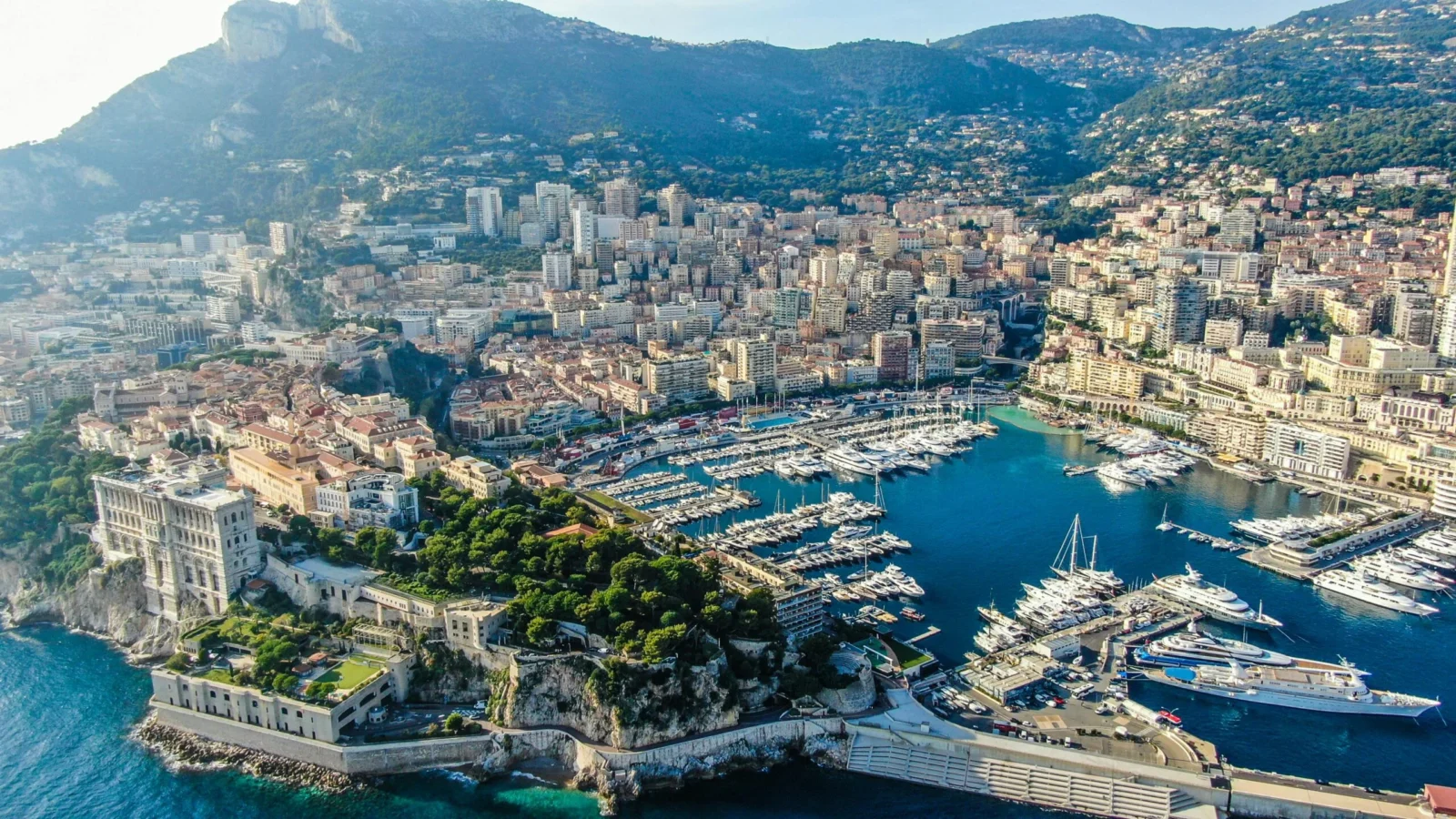
| Monaco | Monaco | 2.02 | 38,600 | Prince Albert II |
| San Marino | San Marino | 61 | 33,600 | Two Captains Regent |
| Liechtenstein | Vaduz | 160 | 39,900 | Prince Hans-Adam II |
| Malta | Valletta | 316 | 539,600 | President |
| Andorra | Andorra la Vella | 468 | 81,900 | Two co-princes |
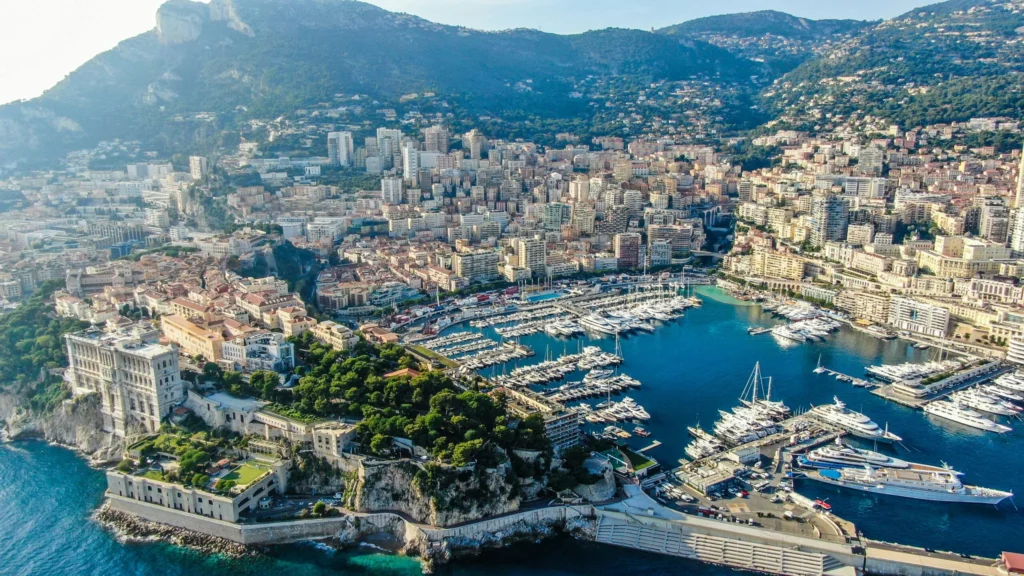
These are the survivors. Every one of them should have been swallowed during the consolidation of Europe, and each dodged it for a different reason. San Marino sat on a mountain nobody needed and gave Garibaldi shelter, which bought it a permanent favour. Liechtenstein was bought as a pair of estates so its owners could qualify for a seat in the Imperial Diet, and the family only moved in properly in 1938. Andorra has been jointly ruled since 1278 by the Bishop of Urgell and whoever holds the French head of state role, currently the President of France, which makes Emmanuel Macron a reigning co-prince of a Pyrenean principality.
The governing arrangements stay unusual. San Marino elects two Captains Regent who serve for six months at a time, twice a year, every year since the fourteenth century. Liechtenstein abolished its army in 1868 on grounds of cost and has never rebuilt one. Vatican citizenship is not inherited and not granted by residence, it attaches to a job, so the population turns over with the Curia and the Swiss Guard. Monaco keeps growing sideways instead of outwards, and the Mareterra district, opened at the end of 2024, added about six hectares of reclaimed sea.
Malta is the outlier in this group, an EU member since 2004 with more people than the other five combined several times over, and Valletta is the smallest capital city in the European Union.
The Caribbean seven
| Country | Capital | Area (km²) | Population | Independence |
|---|---|---|---|---|
| Saint Kitts and Nevis | Basseterre | 261 | 46,900 | 1983 |
| Grenada | St George’s | 344 | 117,200 | 1974 |
| Saint Vincent and the Grenadines | Kingstown | 389 | 100,600 | 1979 |
| Barbados | Bridgetown | 430 | 282,500 | 1966 |
| Antigua and Barbuda | St John’s | 442 | 93,800 | 1981 |
| Saint Lucia | Castries | 616 | 179,800 | 1979 |
| Dominica | Roseau | 750 | 66,200 | 1978 |
Seven countries, all former British possessions, all independent inside a seventeen year window, and between them they hold under a million people. Saint Kitts and Nevis is the smallest sovereign state in the Americas by both measures and the only federation in the Caribbean, with Nevis holding its own assembly and a constitutional right to secede.
Barbados removed the British monarch as head of state in November 2021 and became a republic inside the Commonwealth. Dominica is the one people confuse with the Dominican Republic and the one that rewards a visit least like the others, being mountainous, volcanic and largely without beaches, with a boiling lake at the end of a hard day’s walk and the last surviving pre-Columbian community in the eastern Caribbean in the Kalinago Territory. Saint Lucia has produced two Nobel laureates, Arthur Lewis in economics and Derek Walcott in literature, from a population smaller than Reading.
The Pacific seven
| Country | Capital | Area (km²) | Population | Highest point |
|---|---|---|---|---|
| Nauru | Yaren (de facto) | 21 | 12,000 | 65 m |
| Tuvalu | Funafuti | 26 | 9,700 | 4.6 m |
| Marshall Islands | Majuro | 181 | 37,600 | 10 m |
| Palau | Ngerulmud | 459 | 17,700 | 242 m |
| Micronesia | Palikir | 702 | 113,200 | 791 m |
| Tonga | Nukuʻalofa | 747 | 104,200 | 1,033 m |
| Kiribati | Tarawa | 811 | 134,500 | 81 m |
Land area understates these countries badly. Kiribati holds 811 square kilometres of coral scattered across roughly 3.5 million square kilometres of ocean, and it is the only country on earth sitting in all four hemispheres. Micronesia’s 607 islands are spread over an exclusive economic zone of more than 2.9 million square kilometres. The Marshall Islands is about 98 per cent water by area, a higher share than any other sovereign state.
Four of the seven are atoll nations where the highest natural ground is measured in single metres, and that is now the defining political fact of the region rather than a footnote. Tuvalu amended its constitution in 2023 to declare that its statehood continues regardless of sea level, and the Falepili Union treaty with Australia, in force since August 2024, made Australia the first country to recognise that in writing. The treaty’s mobility pathway offers up to 280 permanent residence places a year by random ballot. In the first round in 2025, registrations covered roughly 8,700 people, which is somewhere between two thirds and four fifths of the eligible population. The first 280 have already arrived in Australia.
Nauru is taking a different route to the same problem. Phosphate made it briefly one of the richest countries per head on earth, then the phosphate ran out and left about four fifths of the island mined into a moonscape of limestone pinnacles. The Higher Ground Initiative is a multi decade plan to move the population inland onto that rehabilitated interior, and it is partly funded by a citizenship by investment programme launched in 2025 that sells passports for around 90,000 US dollars. More than 120 have been granted so far.
Tonga is the only Pacific nation never brought under colonial rule and still runs as a kingdom. Palau was the last United Nations trust territory anywhere, becoming independent in 1994, and since 2017 every arriving visitor has had to sign the Palau Pledge, an environmental promise stamped into their passport and addressed to the children of Palau.
The Indian Ocean and the Atlantic
| Country | Capital | Area (km²) | Population | Islands |
|---|---|---|---|---|
| Maldives | Malé | 298 | 527,800 | 1,192 |
| Seychelles | Victoria | 452 | 130,400 | 115 |
| São Tomé and Príncipe | São Tomé | 964 | 235,500 | 2 main |
The Maldives is the flattest country in the world, with a natural high point around 2.4 metres, and it has more people than any other micro-state except Singapore and Bahrain. Almost all of them live on a handful of islands, and Malé is among the most densely packed cities anywhere. The resort model of one island, one hotel exists partly because the alternative would be building on land that is already spoken for.
Seychelles has the highest income per head in Africa and the smallest population of any sovereign African state. Its granite inner islands are geologically unlike almost every other tropical archipelago, being fragments of a continent rather than volcanic or coral in origin.
São Tomé and Príncipe sits on the equator in the Gulf of Guinea, was uninhabited until the Portuguese arrived in the 1470s, and ran on sugar and then cocoa. Príncipe, the smaller island, is a UNESCO biosphere reserve with a few thousand residents and almost no tourism infrastructure.
The two that broke the pattern
| Country | Area (km²) | Population | Density per km² |
|---|---|---|---|
| Singapore | 728 | 5,800,000 | About 8,000 |
| Bahrain | 760 | 1,600,000 | About 2,100 |
Singapore is a micro-state by land and nothing like one by any other measure. Expelled from Malaysia in 1965 against its own wishes, it has since grown its territory by roughly a quarter through reclamation, much of it using sand imported from neighbours who have progressively banned the trade. It is one of only three surviving true city-states, the others being Monaco and the Vatican.
Bahrain was the first Gulf state to strike oil, in 1932, and the first to face life after it. The King Fahd Causeway has connected the island to Saudi Arabia since 1986, which turned a small archipelago into a weekend destination for a very large neighbour, and the Formula One circuit has done something similar on a smaller scale since 2004.
The outliers
Smallest is Vatican City at 0.49 square kilometres, a walled enclave inside Rome that came into existence only in 1929 under the Lateran Treaty. Its national railway runs to about 300 metres of track, the shortest in the world, and it is used for freight and the occasional papal departure.
Least populous is also Vatican City, at roughly 500 people. Among UN member states the title goes to Tuvalu at about 9,700, low enough that the entire country would fit inside a single Premier League stadium with room to spare.
Densest is Monaco, at around 19,000 residents per square kilometre, which is several times Manhattan. Least dense of the twenty five is Palau, at under 40 per square kilometre, because almost all of its land is uninhabited rock and forest.
Highest is Andorra, whose average elevation is close to 2,000 metres and whose capital sits at 1,023 metres, making Andorra la Vella the highest capital city in Europe. Flattest is the Maldives, and the gap between those two is about 2,000 metres of altitude and one existential problem.
Most spread out is Kiribati, which moved the international date line eastwards in 1995 so that its far flung islands could share a calendar day. The side effect is that Kiritimati sees each new year before anywhere else on earth.
Only doubly landlocked micro-state is Liechtenstein, meaning every one of its neighbours is landlocked too. Uzbekistan is the only other country in the world in that position.
Four of the twenty five have no airport of their own: Vatican City, San Marino, Andorra and Liechtenstein. All four are in Europe and all four are reachable by road in under three hours from a major airport, which is not a coincidence so much as the reason they never bothered.
How micro-states actually work
Sovereignty at this scale means running a full state apparatus on a tax base that would embarrass a mid sized town, so every one of the twenty five specialises rather than diversifies. Four models cover almost all of them.
Financial services and residence built the European group. Monaco charges no income tax on most residents, Liechtenstein and Andorra spent decades as low tax jurisdictions and have since signed up to international information sharing, and San Marino runs banking alongside a surprisingly large stamp and coin business. Tourism carries the Caribbean seven and the Indian Ocean three, in several cases supplying more than half of GDP, which is a comfortable position until a hurricane season goes badly. Barbuda was left almost entirely uninhabitable by Hurricane Irma in 2017.
Aid, fishing licences and treaty relationships hold up much of the Pacific. The Marshall Islands, Micronesia and Palau all operate under a Compact of Free Association with the United States, which supplies budget support and the right to live and work in America in exchange for exclusive military access. That last clause explains a good deal about why these particular countries exist as separate states at all. Tuvalu earns a meaningful share of national revenue from leasing its .tv internet domain, which is the sort of accident of the alphabet that a country of 9,700 people cannot afford to be embarrassed about.
Selling citizenship is the fourth model and the most contested one. Saint Kitts and Nevis started the first modern programme in 1984, Antigua and Barbuda, Grenada, Dominica and Saint Lucia followed, and Nauru joined in 2025. The EU and the US have both applied steady pressure on Caribbean programmes over due diligence, and prices and screening have risen in response.
What none of them can do is absorb a shock internally. A single bad year in one industry is a national economic crisis, and there is no second region to carry the load.
Planning a trip around this list
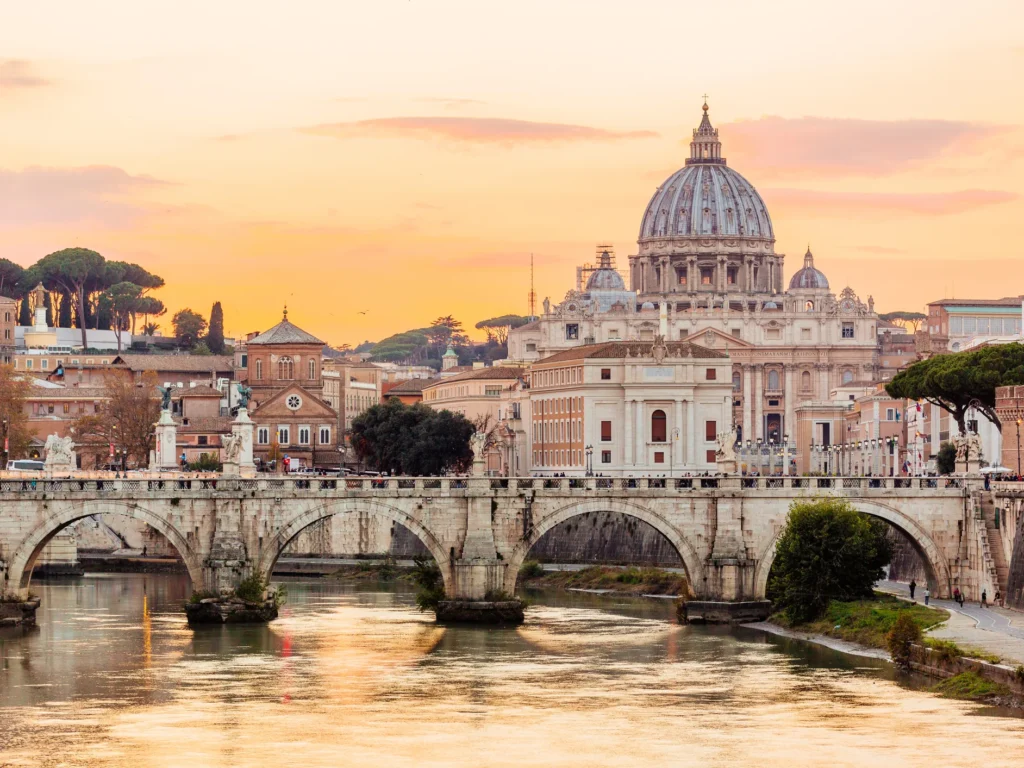
The European six are the only group that works as a set. All of them can be reached overland from a small number of hubs, and two weeks with rail and bus tickets covers the lot: Rome for the Vatican, Nice for Monaco, Rimini for San Marino, Zurich or Innsbruck for Liechtenstein, Barcelona or Toulouse for Andorra, and a flight to Malta at either end. Andorra has neither an airport nor a railway station, so the bus from Barcelona is not a budget option, it is the option.
The Caribbean seven divide sensibly into two clusters. Antigua, Saint Kitts and Nevis sit close together in the north, while Saint Lucia, Saint Vincent, Grenada and Dominica string down the Windward chain with ferry links running between several of them and the French islands in between. Barbados sits off to the east and works best as a start or finish rather than a middle.
The Pacific seven are a different order of difficulty and expense. The one route that makes several of them practical in a single trip is United’s Island Hopper, a scheduled 737 service between Honolulu and Guam that puts down at Majuro, Kwajalein, Kosrae, Pohnpei and Chuuk over about sixteen hours, carries an onboard mechanic and swaps its flight crew partway. It runs a few times a week, the stops vary by day, and tickets can be broken into individual legs with stopovers of days or weeks. Nauru is reached from Brisbane or via Nauru Airlines’ regional network, and Tuvalu from Fiji on a service that operates a handful of times a week onto a runway that doubles as Funafuti’s evening football pitch.
Book accommodation well ahead anywhere in this list, because inventory is genuinely finite. Vatican City has no hotels at all, Tuvalu has a few dozen rooms in total, and one conference or one cruise call can absorb everything available.
Frequently asked questions
How many micro-states are there? Twenty five sovereign countries are smaller than 1,000 square kilometres. There is no official definition, so counts vary between about ten and thirty depending on whether the threshold used is area, population, or both.
What is the smallest country in the world? Vatican City, at 0.49 square kilometres and roughly 500 residents, which makes it the smallest by both area and population. It has existed as a state only since the Lateran Treaty of 1929.
What is the smallest country in the world by population? Vatican City again, at about 500. Among full UN member states the smallest is Tuvalu, at roughly 9,700 people.
What are the European micro-states? Six of them: Vatican City, Monaco, San Marino, Liechtenstein, Malta and Andorra. All but Malta are landlocked, and all but Malta are under half a million people.
Is Vatican City a real country? Yes. It is a sovereign state with its own head of state, currency arrangements, police force and diplomatic service. It is not a UN member by choice, holding permanent observer status instead so that it can stay out of political voting.
What is the difference between a micro-state and a micronation? A micro-state is a sovereign country recognised by others, and a micronation is a self declared entity that nobody recognises. Sealand, Liberland and Molossia are micronations. None of them is on this list.
Which micro-state has the most people? Singapore, at about 5.8 million on 728 square kilometres. Bahrain is second at roughly 1.6 million, and after those two the largest is Malta at around 540,000.
Are any micro-states landlocked? Four of them: Vatican City, San Marino, Andorra and Liechtenstein. Liechtenstein is doubly landlocked, meaning its neighbours are landlocked as well, a distinction it shares only with Uzbekistan.
Which micro-states are threatened by rising sea levels? The atoll nations most of all, meaning Tuvalu, Kiribati, the Marshall Islands and the Maldives, where the highest natural ground ranges from about 2.4 to 10 metres. Tuvalu’s treaty with Australia, in force since 2024, created the first migration pathway anywhere designed around that risk.
Which is the newest micro-state? Palau, which became independent on 1 October 1994 as the last United Nations trust territory to be wound up. The oldest is San Marino, which dates its foundation to 301 CE and claims to be the world’s oldest surviving republic.