The Parc de la Ciutadella is the best-loved park in Barcelona, 31 hectares of lawns, palms, fountains and museums on the edge of the old city. It stands on the site of a hated fortress built to keep the people of Barcelona under control, and for decades it was the only green space in the city. Today it holds the zoo, the Catalan Parliament, a boating lake and one of the most theatrical fountains in Spain. This guide covers its history, what to see, and how to visit.
Key facts at a glance
- Location: Passeig de Picasso 21, 08003 Barcelona
- Size: 31 hectares (77 acres)
- Created: 1872, by Josep Fontserè
- Entry: free
- Open: daily, from 10 am until dusk
- Highlights: the Cascada, the lake, the zoo and the Parliament
From fortress to park
In 1714, after a siege of 13 months, the army of King Philip V captured Barcelona at the end of the War of the Spanish Succession. To make sure the city never rebelled again, the king built a vast star-shaped citadel on its eastern side, one of the largest fortresses in Europe. To clear the ground, much of the Ribera district was demolished and thousands of people lost their homes, and the citizens were forced to work on the construction for three years.
The Ciutadella became the most hated symbol of central government in Catalonia. It was used as a political prison, and repeated attempts were made to pull it down. In 1869 General Prim finally handed it over to the city, and most of it was demolished. Only the arsenal, the chapel and the governor’s palace were kept.
The master builder Josep Fontserè won the competition to turn the site into a public park, and work began in 1872. In 1888 the park was chosen as the setting for the Universal Exposition, the world fair that announced modern Barcelona, and several of its buildings and many of its sculptures date from that year.
What to see
The Cascada
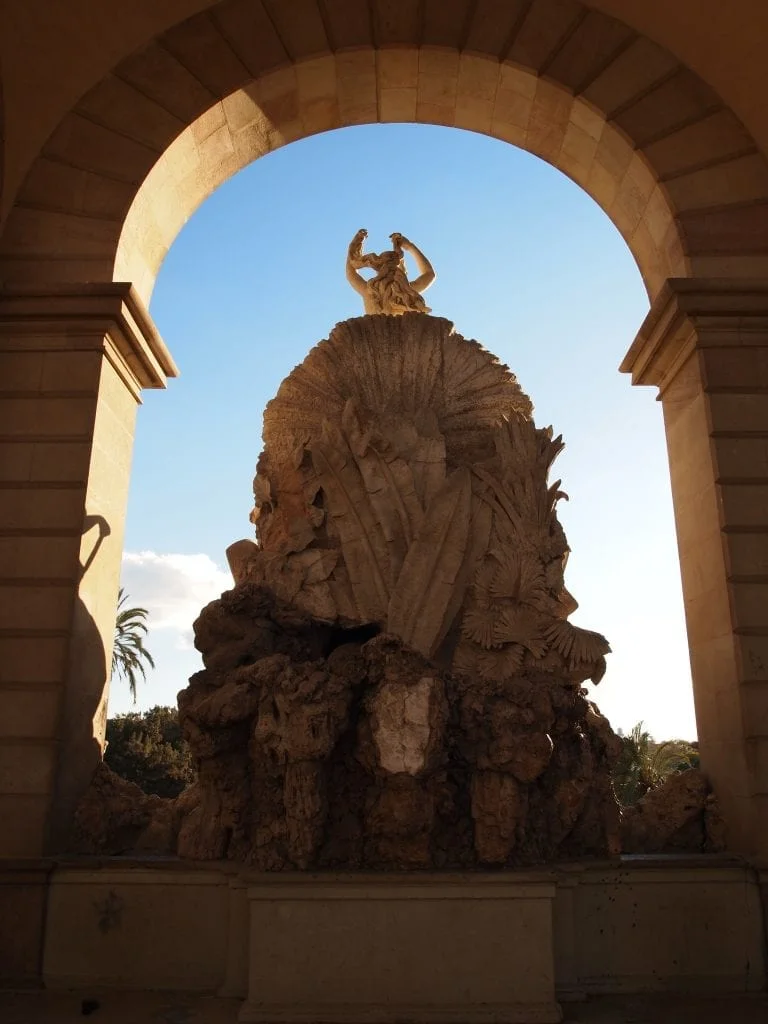
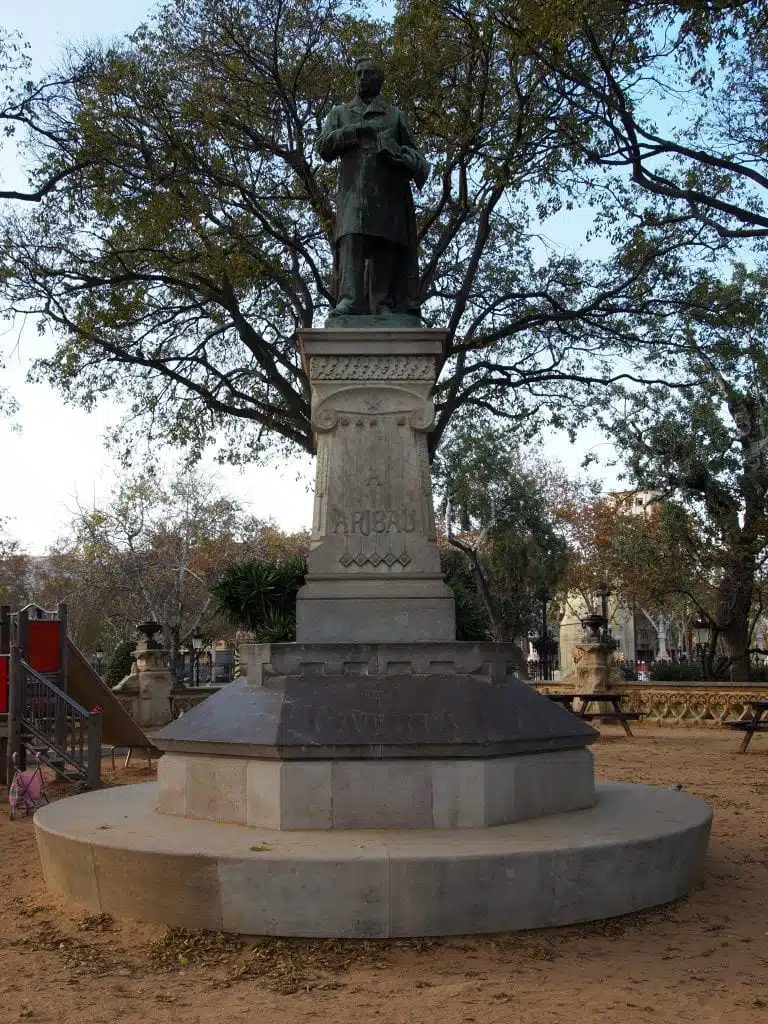
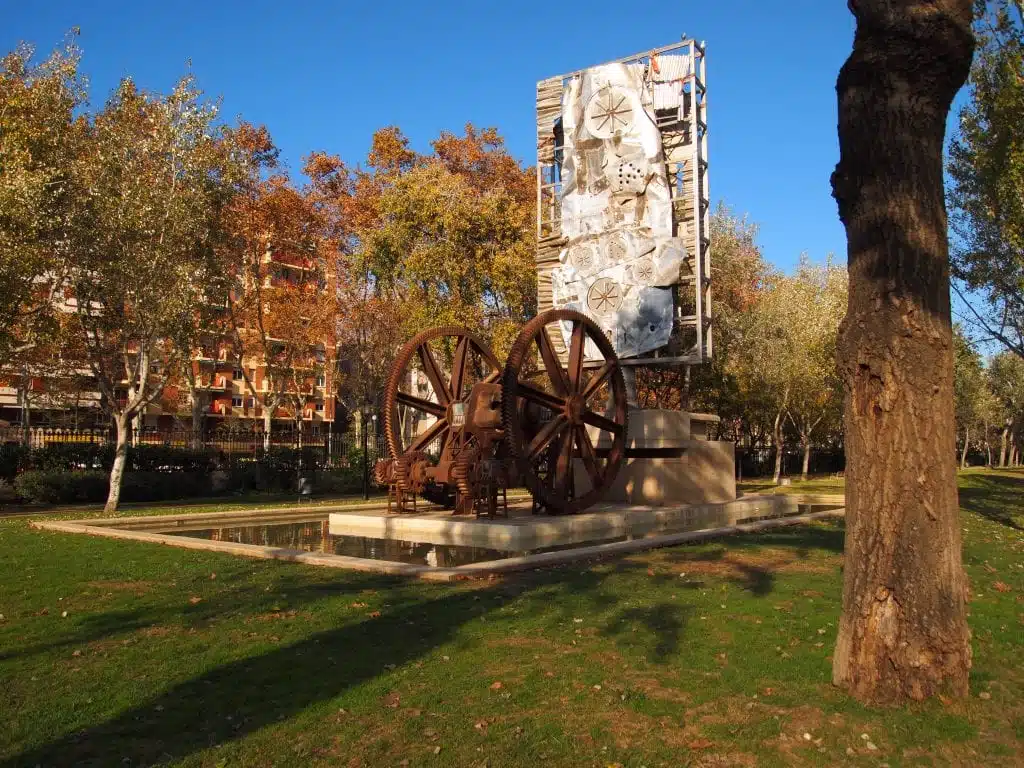
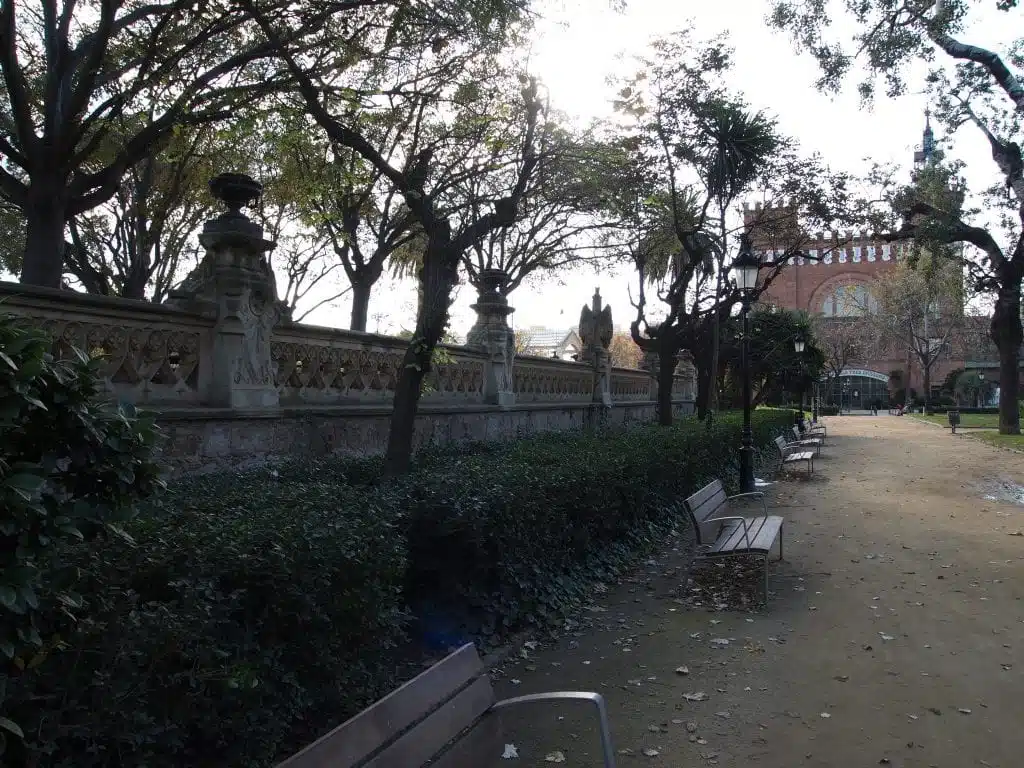
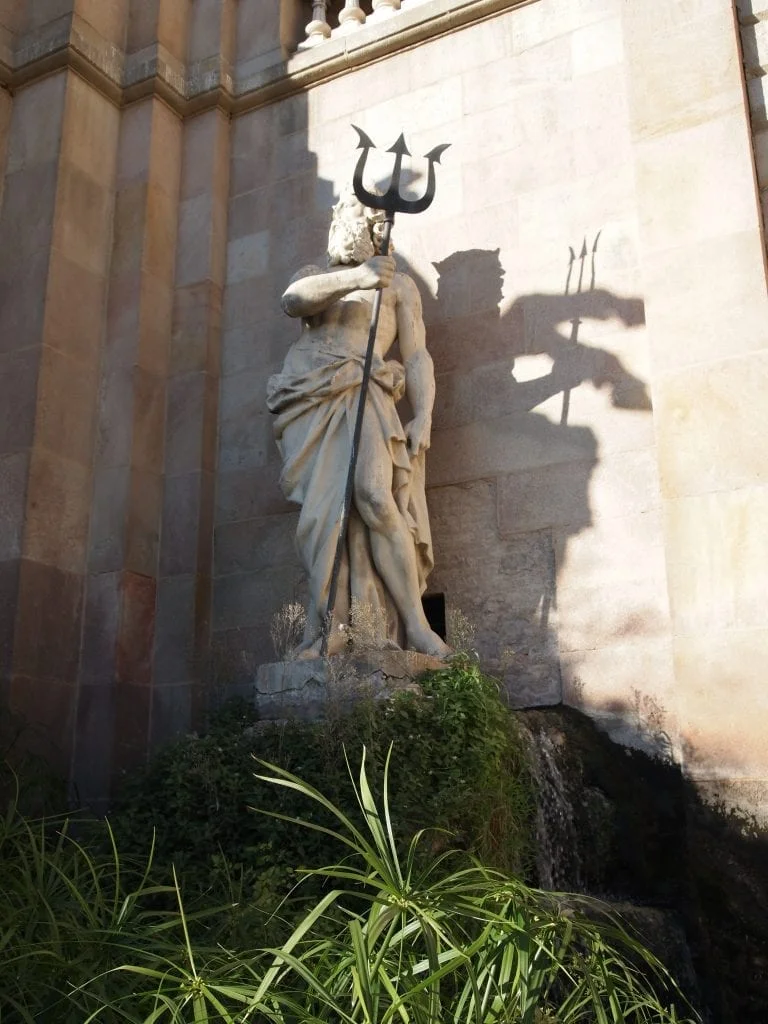
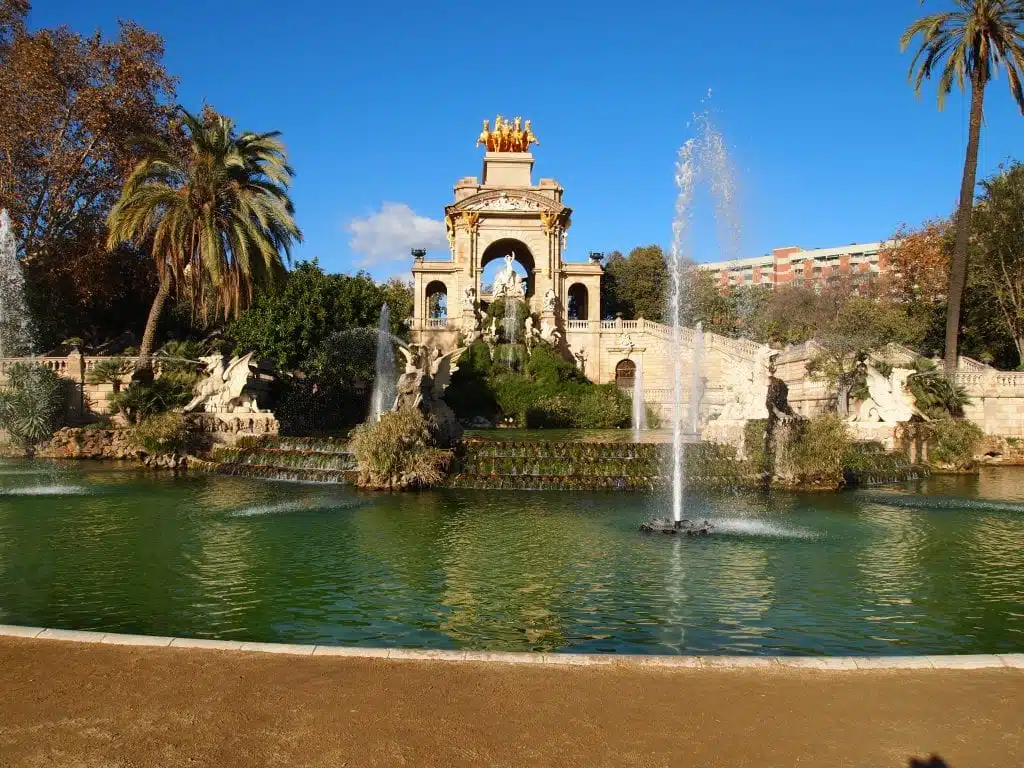
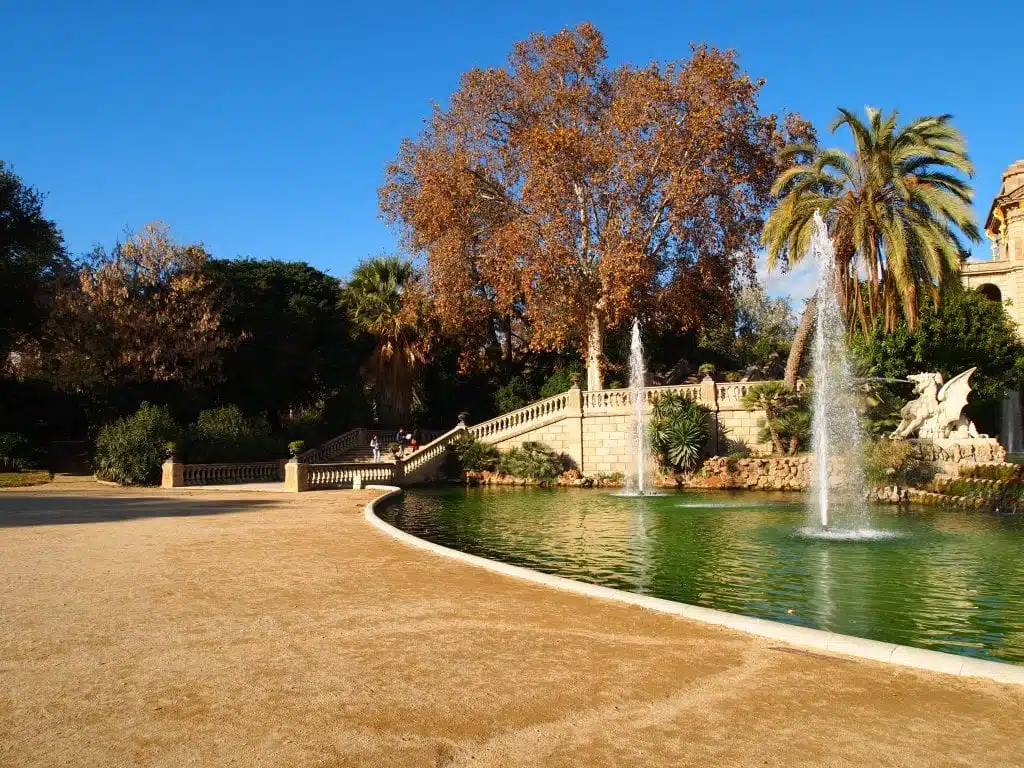
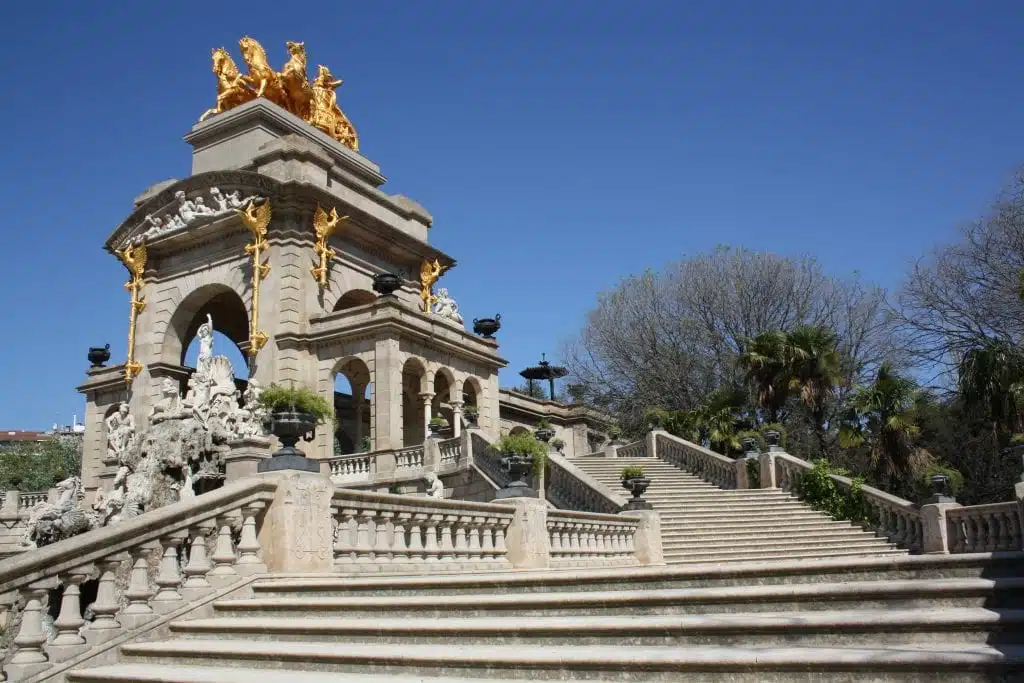
The monumental fountain in the northern corner of the park is its most photographed feature. Designed by Fontserè and loosely inspired by the Trevi Fountain in Rome, it was first opened in 1881 and enlarged over the following years. A triumphal arch flanked by stairways rises above a waterfall and a pool guarded by winged dragons, with a statue of Venus in the centre and a gilded chariot, the Quadriga of Aurora, on the top. The young Antoni Gaudí, then a student, worked on the project as an assistant.
The lake
Rowing boats can be hired on the small lake in the middle of the park, a favourite with families at weekends.
The Parliament of Catalonia
The old arsenal of the citadel has housed the Catalan Parliament since 1932, with an interruption during the Franco dictatorship. In the pond in front of it stands “Desconsol” (Grief), a marble figure by Josep Llimona and one of the best-known sculptures in the city.
Barcelona Zoo
The zoo, which occupies the southern half of the park, opened in 1892 in buildings left over from the exposition. For 37 years it was the home of Snowflake, the only known albino gorilla, who lived here from 1966 until his death in 2003. There is a separate entrance fee.
The Castle of the Three Dragons
This red-brick building with battlements, at the north-west entrance, was designed by Lluís Domènech i Montaner as the café-restaurant of the 1888 exposition. One of the first works of Catalan Modernisme, it later served as the zoology museum.
The Hivernacle and the Umbracle
Two elegant 19th-century plant houses stand side by side along the Passeig de Picasso: a glass-and-iron winter garden and a shade house of brick and wooden slats, filled with tropical plants.
The mammoth
A life-size stone mammoth, made in 1907, stands among the trees near the lake. It was meant to be the first of a series of prehistoric animals; the others were never made.
The bandstand
The iron bandstand near the Cascada is a meeting place for musicians and dancers. It is dedicated to Sonia Rescalvo Zafra, a transgender woman murdered there in 1991.
The Arc de Triomf
The grand approach to the park is the Passeig de Lluís Companys, a palm-lined promenade that begins at the Arc de Triomf, a red-brick triumphal arch built as the main gateway to the exposition of 1888. Walking from the arch to the Cascada takes about ten minutes.
Visiting the Parc de la Ciutadella
The park is free and open every day from 10 am until dusk. On sunny weekends it fills with picnickers, jugglers, drummers and slackliners, and it is the best place in the city centre to rest after sightseeing in the Born district or the Gothic Quarter.
- Metro: Arc de Triomf (line 1), Ciutadella-Vila Olímpica (line 4) or Jaume I (line 4)
- Boat hire: by the half hour, with prices according to the number of people
- Facilities: toilets, cafés, playgrounds, table tennis and drinking fountains
- Time needed: one to two hours; half a day with the zoo
- Nearby: the Born Cultural Centre, the Picasso Museum, the church of Santa Maria del Mar and Barceloneta beach
Frequently asked questions
Is the Parc de la Ciutadella free?
Yes. Entry to the park is free; the zoo charges admission.
Did Gaudí design the fountain in the Ciutadella park?
No. The Cascada was designed by Josep Fontserè, but Gaudí worked on it as a student assistant.
Why is it called the Ciutadella?
The park stands on the site of the citadel built by Philip V after he captured Barcelona in 1714.
What is there to do in the Parc de la Ciutadella?
See the Cascada, row on the lake, visit the zoo, and walk to the Arc de Triomf.
Which metro station is nearest the Parc de la Ciutadella?
Arc de Triomf, on line 1, or Ciutadella-Vila Olímpica, on line 4.
Last updated: November 2026.