People have been building islands for thousands of years, for defence, for farming, for trade and, more recently, for airports and luxury homes. Here are 24 facts about artificial islands, ancient and modern.
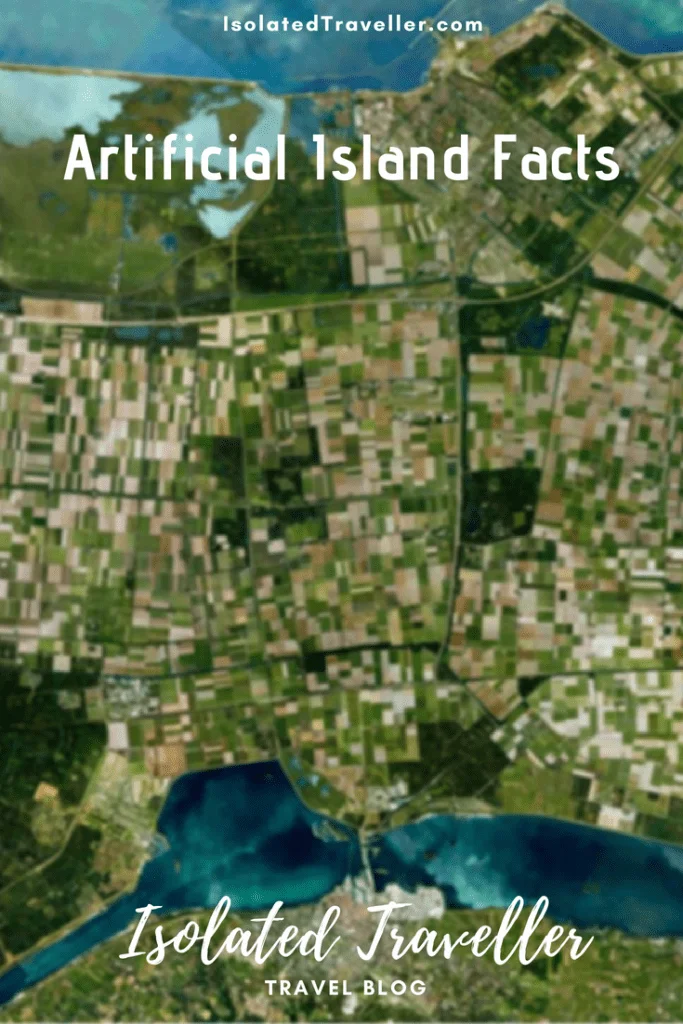
Key facts at a glance
- Largest artificial island: the Flevopolder, Netherlands, about 970 square kilometres
- Best known: Palm Jumeirah, Dubai
- Oldest: prehistoric lake dwellings and crannogs, more than 5,000 years old
- Main methods: land reclamation, dredging and building on piles or reefs
Ancient and historic islands
- Crannogs, artificial islets built in lakes in Scotland and Ireland, date back as far as 5,000 years.
- The Aztec capital Tenochtitlan was enlarged with chinampas, fertile garden plots built up from the bed of Lake Texcoco.
- Nan Madol, in Micronesia, is a ruined city of nearly 100 artificial islets built of basalt from about 1200.
- The Uros people of Lake Titicaca live on floating islands woven from totora reeds, which must be constantly renewed.
- Dejima, a fan-shaped island built in Nagasaki harbour in 1636, was for two centuries Japan’s only window on the West.
- Much of Venice stands on millions of wooden piles driven into the mud of the lagoon.
Records
- The Flevopolder in the Netherlands, drained between 1955 and 1968, is the largest artificial island in the world.
- Kansai International Airport, opened in 1994 on an island in Osaka Bay, has sunk by more than 11 metres since construction began.
- Hong Kong International Airport was built on an island made by levelling and joining two smaller ones.
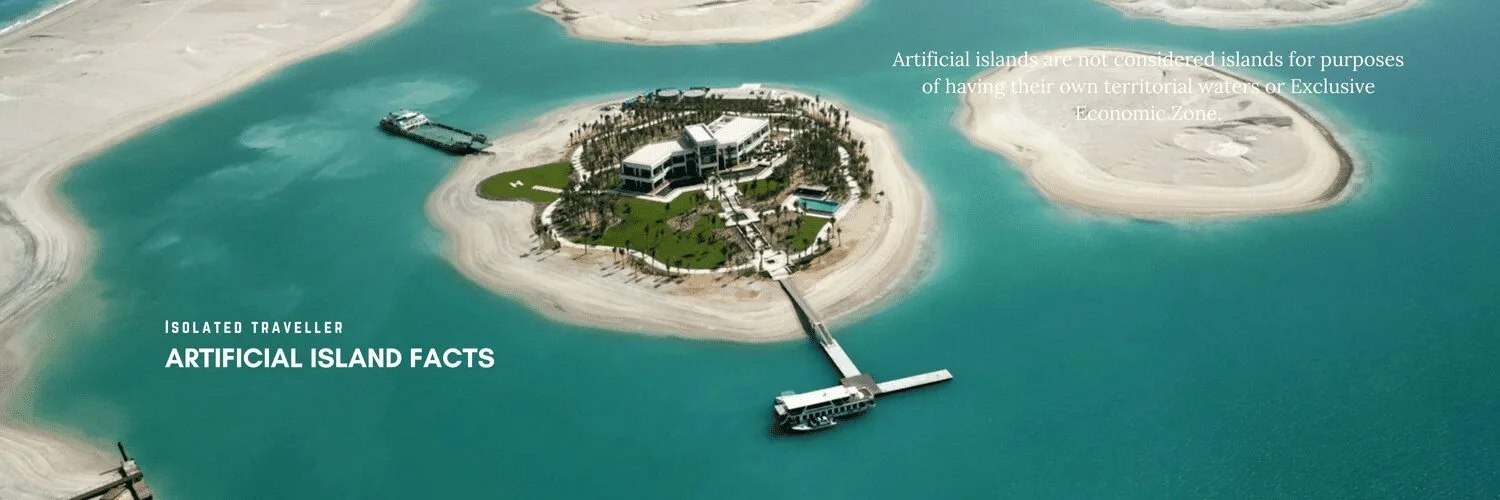
- Palm Jumeirah in Dubai, begun in 2001, used about 94 million cubic metres of sand and added tens of kilometres of coastline.
- “The World”, also in Dubai, is a group of some 300 islands arranged as a map of the Earth; most remain undeveloped.
- The Burj Al Arab hotel stands on its own artificial island, 280 metres offshore.
Islands around the world
- Notre-Dame Island in Montreal was built for Expo 67 with rock excavated from the city’s metro.
- Treasure Island in San Francisco Bay was created for the 1939 world’s fair.
- Odaiba, in Tokyo Bay, began as a line of gun batteries built in the 1850s.
- Peberholm was built between Denmark and Sweden to link the bridge and tunnel of the Øresund crossing.
- The Île aux Cygnes in Paris, with its replica Statue of Liberty, was created in 1827.
- Hulhumalé, in the Maldives, was raised two metres above sea level as a refuge from rising seas.
- Thilafushi, also in the Maldives, began in 1992 as a rubbish dump in a lagoon.
- IJburg, in Amsterdam, is a residential district on new islands in the IJmeer.
- The Pearl, in Qatar, covers nearly four square kilometres of reclaimed land.
Issues
- Dredging and reclamation can destroy coral reefs and seagrass beds and change currents.
- Under the law of the sea, artificial islands do not have the status of islands and generate no territorial waters of their own.
- Sealand, a self-declared “principality” off the English coast, is not an island but a wartime sea fort.
Read more
See also our fascinating island facts.
Frequently asked questions
What is the largest artificial island in the world?
The Flevopolder in the Netherlands.
What is the most famous artificial island?
Palm Jumeirah in Dubai.
How are artificial islands made?
Usually by dredging sand or dumping rock on the seabed, or by draining land behind dykes.
Are artificial islands sinking?
Some, such as Kansai Airport, have settled considerably.
Last updated: November 2026.