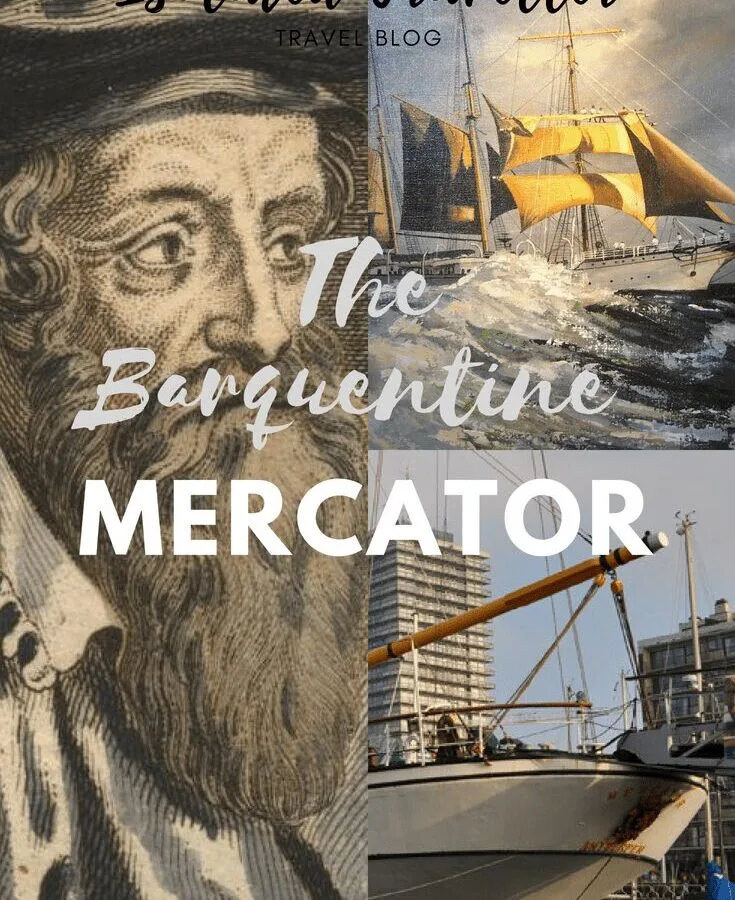
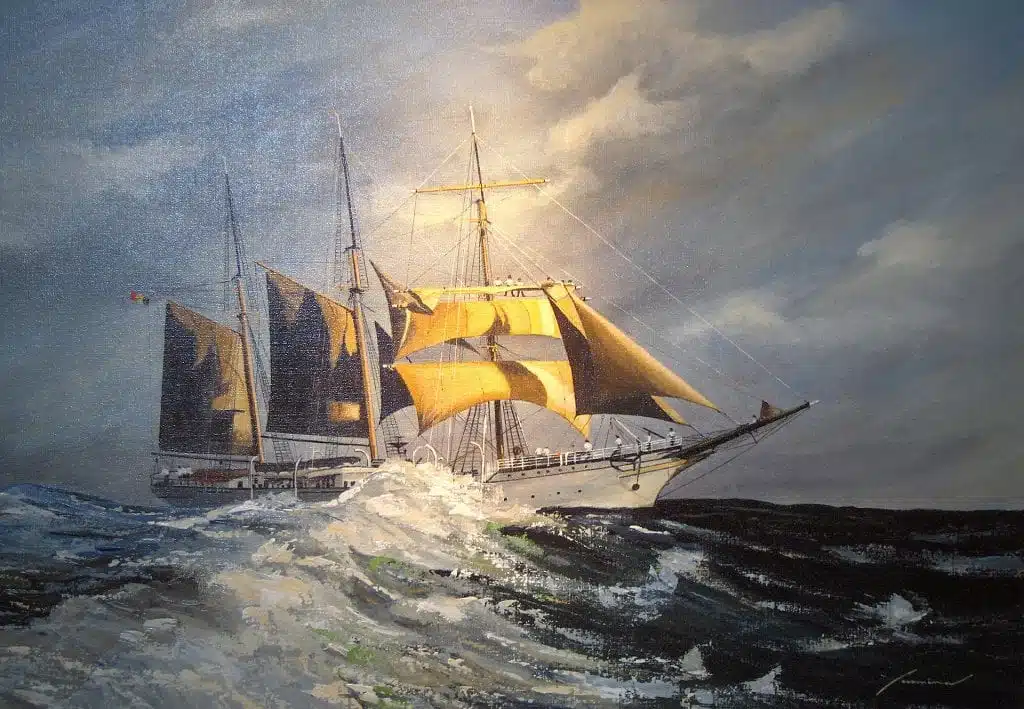
The Mercator is the most famous ship in Belgium: a graceful white three-masted barquentine that served for almost thirty years as the training ship of the Belgian merchant navy. Built in 1932, she sailed on scientific expeditions to Easter Island and the Pacific, raced against the great sailing ships of the world, and carried home the body of a saint. Since 1964 she has been moored as a museum in the yacht basin in the heart of Ostend, a few steps from the railway station. This guide covers her story and how to visit.
Key facts at a glance
- Location: Mercatordok, 8400 Ostend, Belgium
- Built: 1932, by Ramage and Ferguson at Leith, Scotland
- Type: three-masted barquentine
- Length: about 78 metres overall
- Sail area: about 1,260 square metres
- Named after: the Flemish map-maker Gerardus Mercator
- Museum since: 1961; in Ostend since 1964
History
A ship for cadets
The Mercator was designed by the Antarctic explorer Adrien de Gerlache and built in Scotland for the Belgian government, to train officers for the merchant fleet. She was named after Gerardus Mercator, the 16th-century cartographer born at Rupelmonde in Flanders, whose map projection made navigation by compass possible.
Easter Island
On a voyage of 1934 to 1935 the ship carried a Franco-Belgian scientific expedition to Easter Island. She returned with two of the island’s giant stone statues; one is now in the Art and History Museum in Brussels, and the other in Paris.
Father Damien
In 1936 the Mercator brought back from Hawaii the remains of Father Damien De Veuster, the Flemish missionary who had lived and died among the leprosy patients of Molokai. The ship was received at Antwerp by the king and a vast crowd. Damien was declared a saint in 2009.
War and after
During the Second World War the ship was at sea and passed into British service as a depot ship. Returned to Belgium, she resumed her training voyages in 1951 and took part in the tall ships’ races, winning several. She made her last voyage in 1960.
What to see
On deck
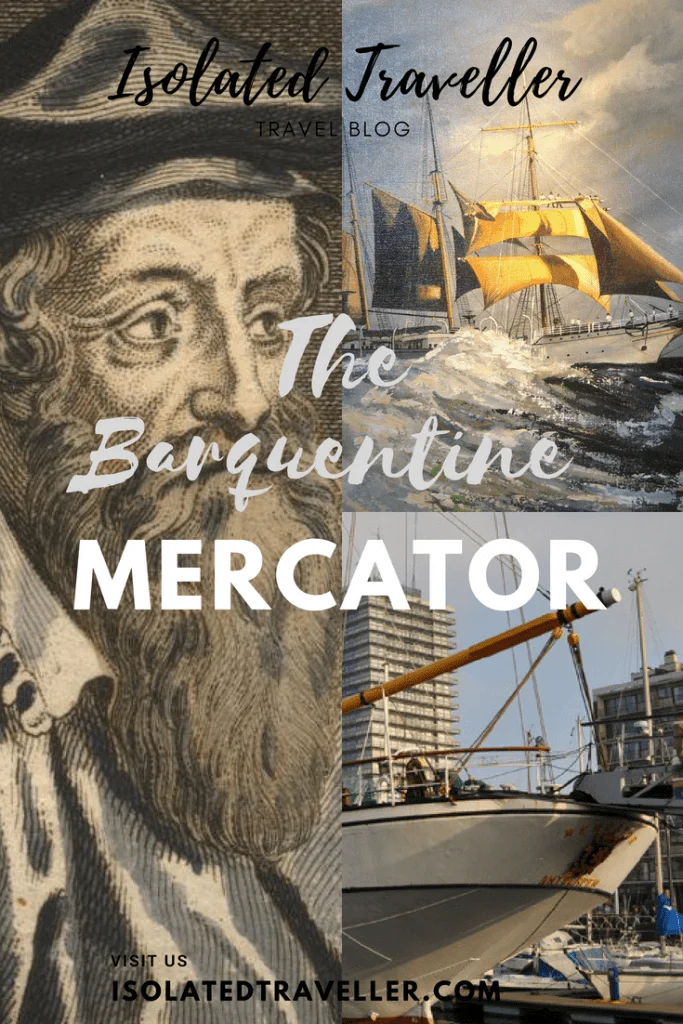
Walk the teak decks beneath the three masts and their web of rigging, visit the wheel and the chart room, and see the figurehead of Mercator at the bow.
Below decks
The officers’ saloon and cabins, the cadets’ quarters with their hammocks, the galley and the engine room have been kept as they were.
The exhibitions
Displays of photographs, instruments, models and souvenirs recall the expeditions, among them shells, weapons and carvings brought back from the Pacific.
Restoration
After decades afloat in fresh and salt water, the hull and masts needed major repair. The ship was dry-docked and extensively restored in 2015 and 2016 before returning to her berth.
Visiting
- Opening times: open on most days, with reduced hours in winter and a closure in January. Check before you go.
- Tickets: a small charge.
- Access: the ship has steep companionways and is not accessible to wheelchair users.
- Getting there: the Mercatordok is two minutes’ walk from Ostend station and the cathedral-like church of St Peter and St Paul.
- Also in the harbour: the Amandine, the last Ostend trawler to fish off Iceland, is another museum ship nearby.
Across the harbour are Fort Napoleon and the Lange Nelle lighthouse. For more on the city, read our interesting facts about Ostend.
Frequently asked questions
What is the Mercator in Ostend?
A three-masted training ship of 1932, now a museum.
Where was the Mercator built?
At Leith in Scotland.
Why is the Mercator famous?
For her expedition to Easter Island and for bringing home the remains of Father Damien.
Can you go on board the Mercator?
Yes, she is open as a museum ship.
Last updated: November 2026.