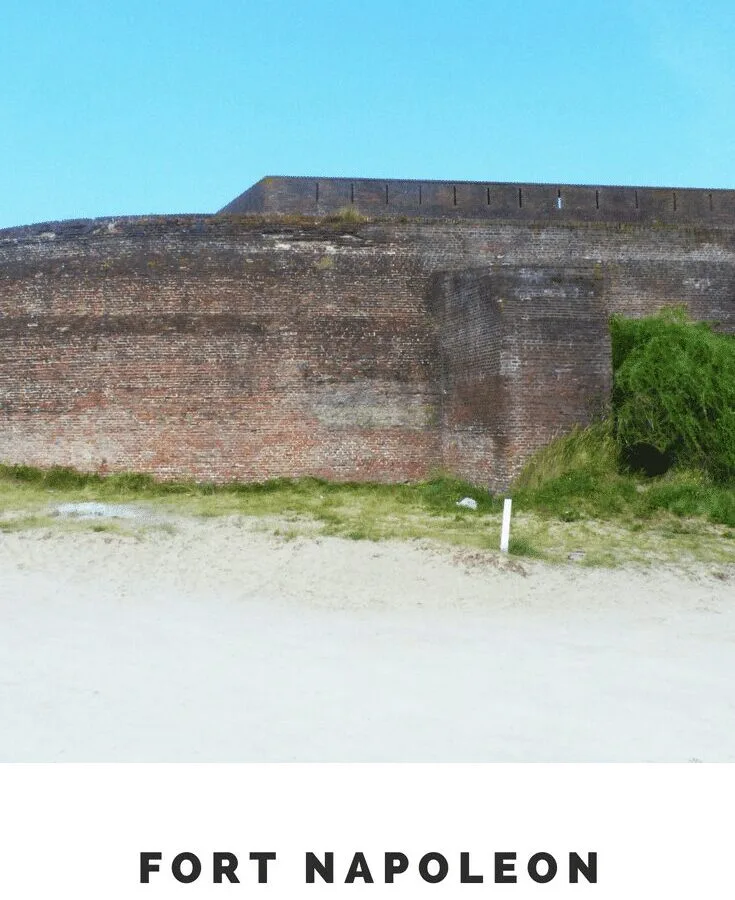
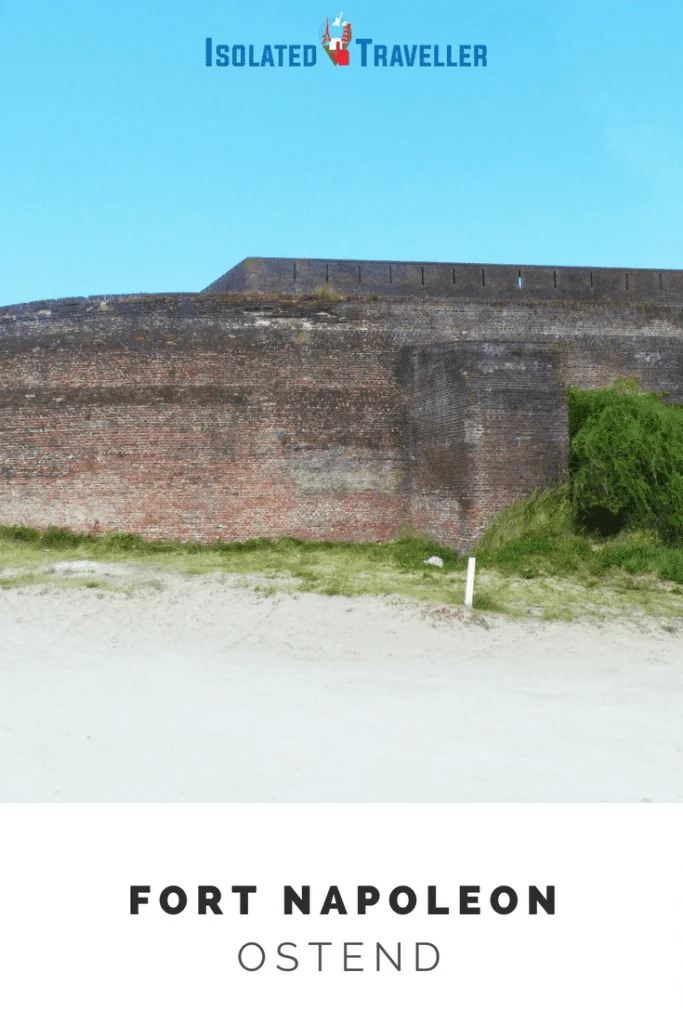
Fort Napoleon is a pentagonal brick fortress hidden in the dunes on the eastern side of the harbour of Ostend. Napoleon Bonaparte had it built between 1811 and 1814 to defend the port against an English landing that never came, and it is one of the best-preserved Napoleonic forts in Europe. In the two centuries since, it has been an arsenal, a German officers’ mess, a museum and a children’s playground. Carefully restored, it is now a heritage site with a bistro on its roof. This guide covers its history and how to visit.
Key facts at a glance
- Location: Vuurtorenweg 13, 8400 Ostend, Belgium
- Built: 1811 to 1814
- Shape: a pentagon surrounded by a dry moat
- Bricks: about 8 million
- Restored: 1995 to 2000
- Managed by: Herita, the Flemish heritage organisation
- Time needed: about an hour
History
Napoleon and the coast
From 1795 the territory of present-day Belgium was part of France. Napoleon, at war with Britain, feared an attack on the ports of the Flemish coast, and after visiting Ostend he ordered forts to be built on either side of the harbour mouth. Only this one, in the dunes to the east, survives; its twin, to the west, was demolished long ago.
Building the fort
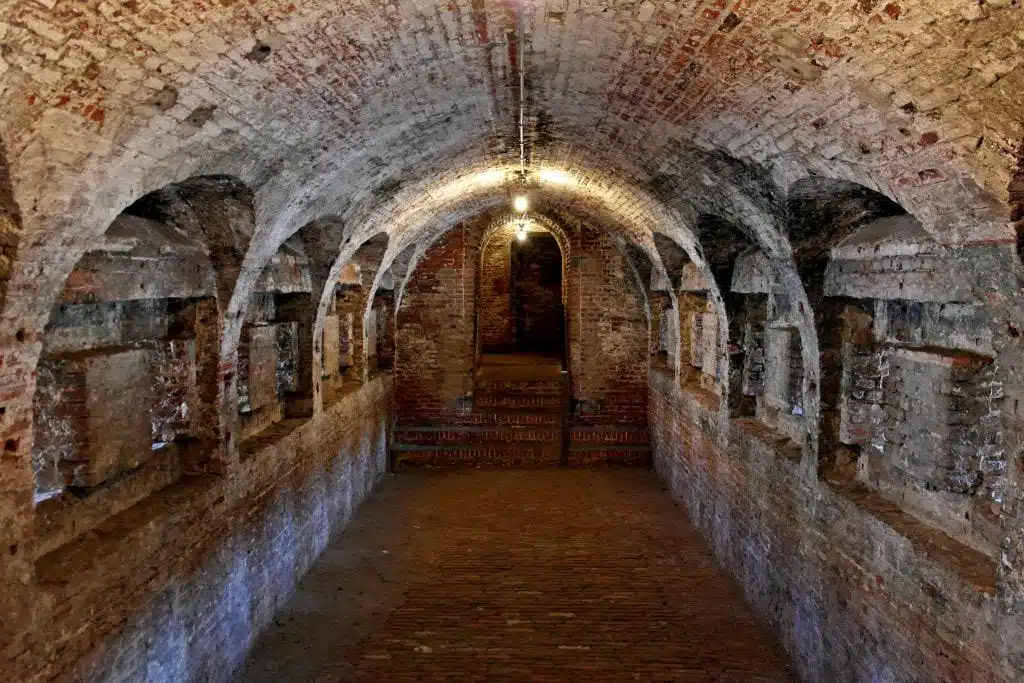
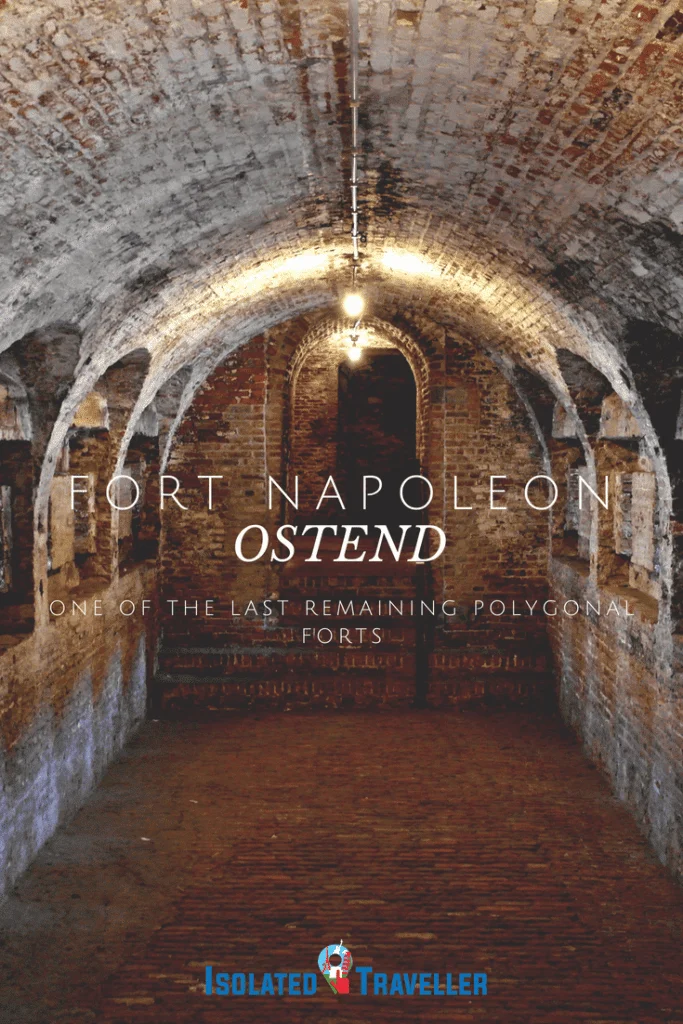
Work began in 1811, using Spanish prisoners of war as labourers. The design was the latest in military engineering: a compact pentagon with two floors of vaulted casemates around a central courtyard, a caponier at each corner to sweep the ditch with fire, and a roof platform for guns. It was barely finished when Napoleon abdicated in 1814, and it never fired a shot in anger.
The Dutch and Belgian armies
Under Dutch and then Belgian rule the fort was used as a barracks and powder store, and it gradually fell out of military use.
Two German occupations
In the First World War German artillery officers took over the fort as their quarters. One of them painted a mural above a fireplace, known as “Der Barbar”, showing a German soldier standing over the allied nations, which survives. In the Second World War the fort became part of the Atlantic Wall.
Ruin and restoration
After 1945 the abandoned fort served as a local museum and then a playground before being left to the weather and vandals. It was listed as a monument in 1976, and between 1995 and 2000 it was restored and opened to the public.
What to see
The architecture

Cross the bridge over the dry moat and walk the circuit of vaulted corridors and gun rooms. The quality of the brickwork is remarkable.
The exhibition
Displays, film and an audio guide tell the story of the fort and of the soldiers of four armies who lived in it.
The mural
The German wall painting of 1915 in the former officers’ room.
The roof
From the top there is a view over the dunes, the harbour channel and the North Sea, and a bistro with a terrace.
Visiting
- Opening times: open on most days in the school holidays and from Wednesday to Sunday at other times; closed on some days in winter. Check the website.
- Tickets: a modest charge, with reductions for children.
- Getting there: the fort is on the east bank, the Oosteroever. A free passenger ferry crosses the harbour from the Visserskaai, near the aquarium, in a few minutes; from the landing it is a 15-minute walk. The coastal tram stops at Duin en Zee.
- Nearby: the Lange Nelle lighthouse, the long breakwater and a quiet beach are close by. Back in the centre is the sailing ship Mercator.
For more on the city, read our interesting facts about Ostend.
More photos of Fort Napoleon


Frequently asked questions
Who built Fort Napoleon in Ostend?
It was built on the orders of Napoleon between 1811 and 1814.
Was Fort Napoleon ever attacked?
No.
How do you get to Fort Napoleon?
By the free harbour ferry and a short walk, or by the coastal tram.
What shape is Fort Napoleon?
A pentagon.
Last updated: November 2026.