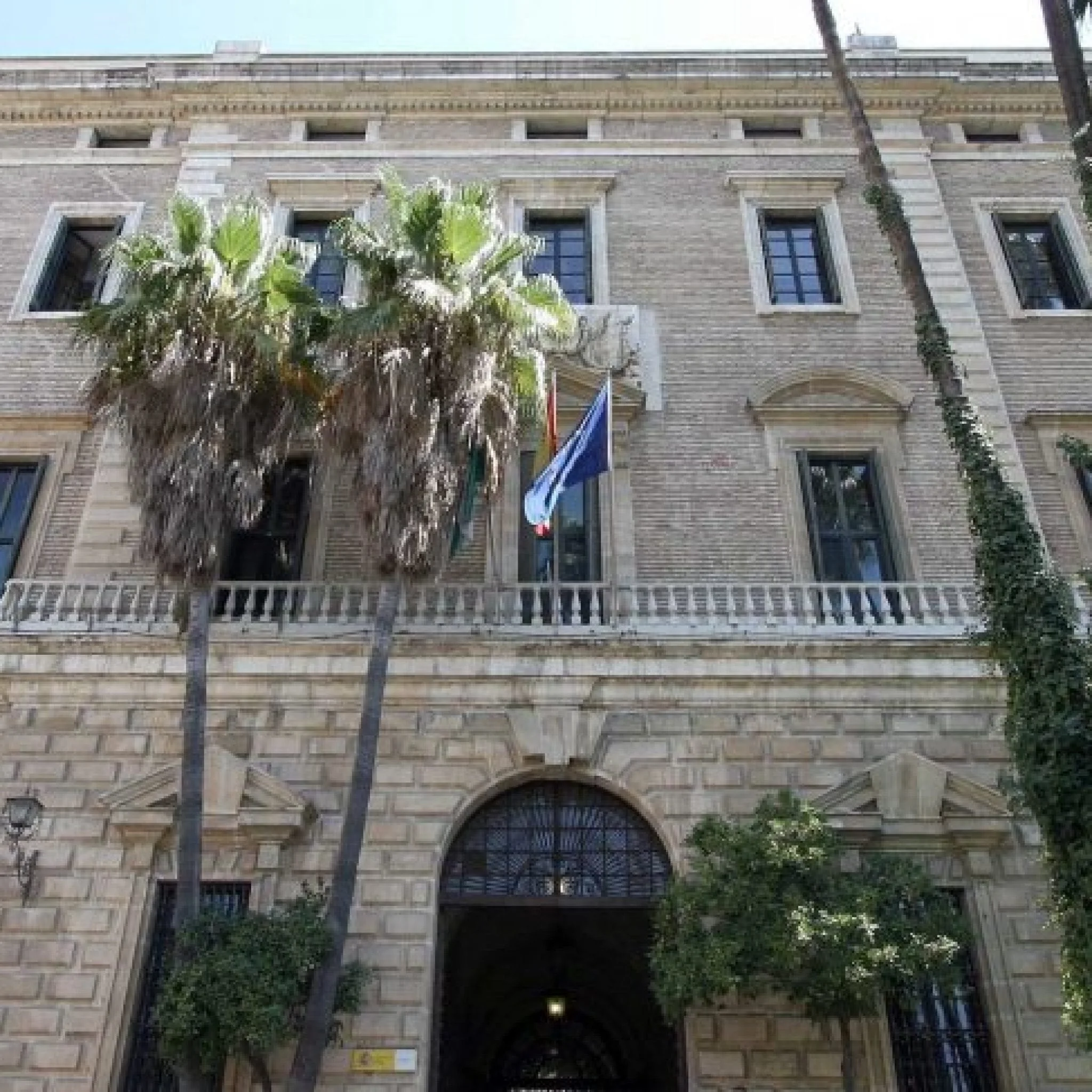
The Museo de Málaga is the museum of fine arts and archaeology of the city and province, and one of the largest museums in Spain. After twenty years without a permanent home, its collections were reunited in December 2016 in the Palacio de la Aduana, the grand neoclassical customs house at the foot of the Alcazaba. With more than 2,000 works of art and some 15,000 archaeological objects, it tells the story of Málaga from the Phoenicians to Picasso’s friends. Entry is free for citizens of the European Union. This guide covers what to see and how to visit.
Key facts at a glance
- Location: Plaza de la Aduana, 29015 Málaga, Spain
- Opened here: 12 December 2016
- Building: the Palacio de la Aduana, begun in 1788
- Collections: fine arts and archaeology
- Closed: Mondays
- Entry: free for EU citizens; a small charge for others
- Time needed: two hours
The building and the museum
The customs house
The palace was designed in 1788 by Manuel Martín Rodríguez, on the model of the Renaissance palaces of Italy, to handle the booming trade of the port. Completed in 1829, it served as a tobacco factory and then as government offices. A fire in 1922 destroyed its original roof.
“The Aduana for Málaga”
The provincial museums of fine arts and archaeology, founded in the 19th and 20th centuries, lost their premises in the 1990s, when the fine arts building was given to the new Picasso Museum. The people of the city campaigned for years, with marches under the slogan “La Aduana para Málaga”, for the customs house to be turned into a museum. The government agreed in 2005, and the restored palace, with a new roof of patterned aluminium tiles, opened in 2016.
What to see
Fine arts (first floor)
The collection is strongest in the 19th century, when Málaga had a flourishing school of painting. Look for the seascapes of Emilio Ocón, the huge and unsettling “Anatomy of the Heart” (“And She Had a Heart!”) by Enrique Simonet, works by Joaquín Sorolla and Federico de Madrazo, and Old Masters including Luis de Morales, Murillo and Ribera. A final section covers the generation of 1927 and artists linked to Picasso, who was born in the city in 1881.
Archaeology (second floor)
The displays begin with the collection formed in the 19th century by the Marquises of Casa Loring, including the Roman mosaics and statues from their estate. They continue with the dolmens of Antequera, the Phoenician colony of Malaka, founded in the 8th century BC, with its tombs and jewellery, Roman fish-sauce factories, and the Islamic city, with fine lustreware pottery, a speciality of medieval Málaga exported across Europe.
The visible storage
On the ground floor a glass-walled store lets you see thousands of objects not on display.
The courtyard
The central patio, with palms and a fountain, is free to enter.
Visiting
- Opening times: Tuesday to Saturday through the day until evening, and on Sundays and holidays until mid-afternoon; closed on Mondays.
- Languages: the labels are in Spanish and English.
- Facilities: a café, a shop, lockers and lifts.
- Getting there: the museum is between the cathedral and the Alcazaba, five minutes’ walk from either.
- Combine with: the Roman theatre, the Picasso Museum and the port.
For more on the city, read our interesting facts about Málaga.
Frequently asked questions
Is the Museo de Málaga free?
Yes for EU citizens; others pay a small charge.
What is in the Museo de Málaga?
The fine arts and archaeology collections of the province.
Where is the Museo de Málaga?
In the Palacio de la Aduana, below the Alcazaba.
Is the Museo de Málaga the same as the Picasso Museum?
No, they are separate museums.
Is the museum open on Mondays?
No.
Last updated: November 2026.